


In 80 Days … All the Way to China
Even though I hadn’t slept particularly well last night, I still got up at seven this morning. I wanted to leave early, and with my departure at almost exactly eight o’clock, I managed to do just that.
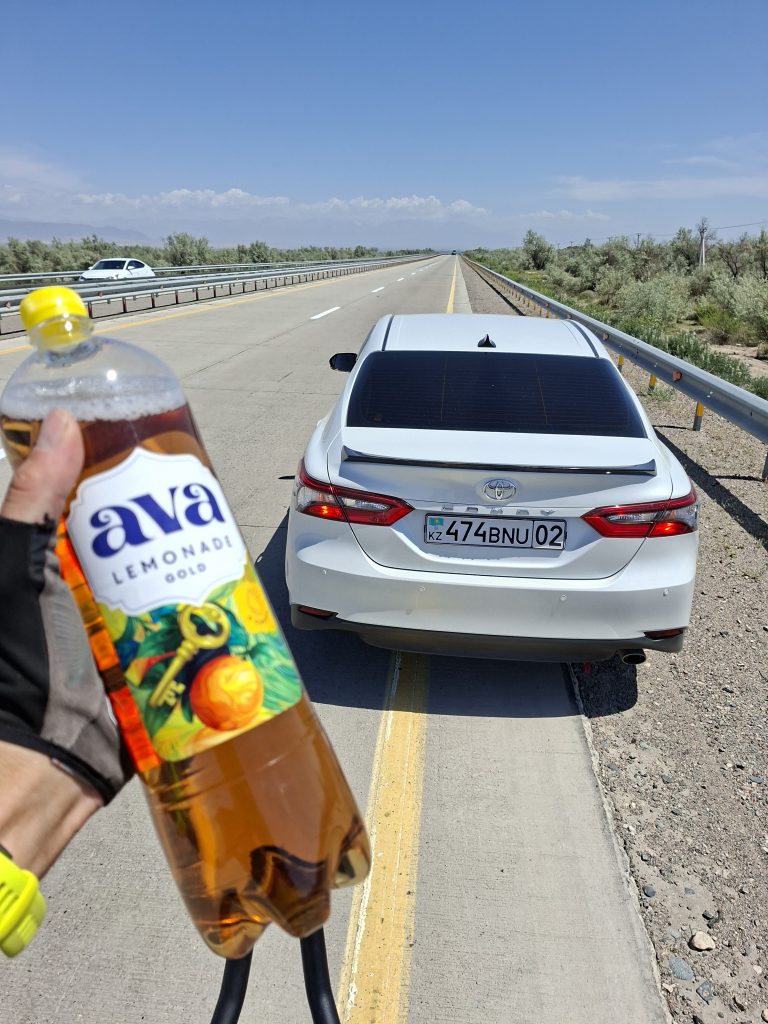
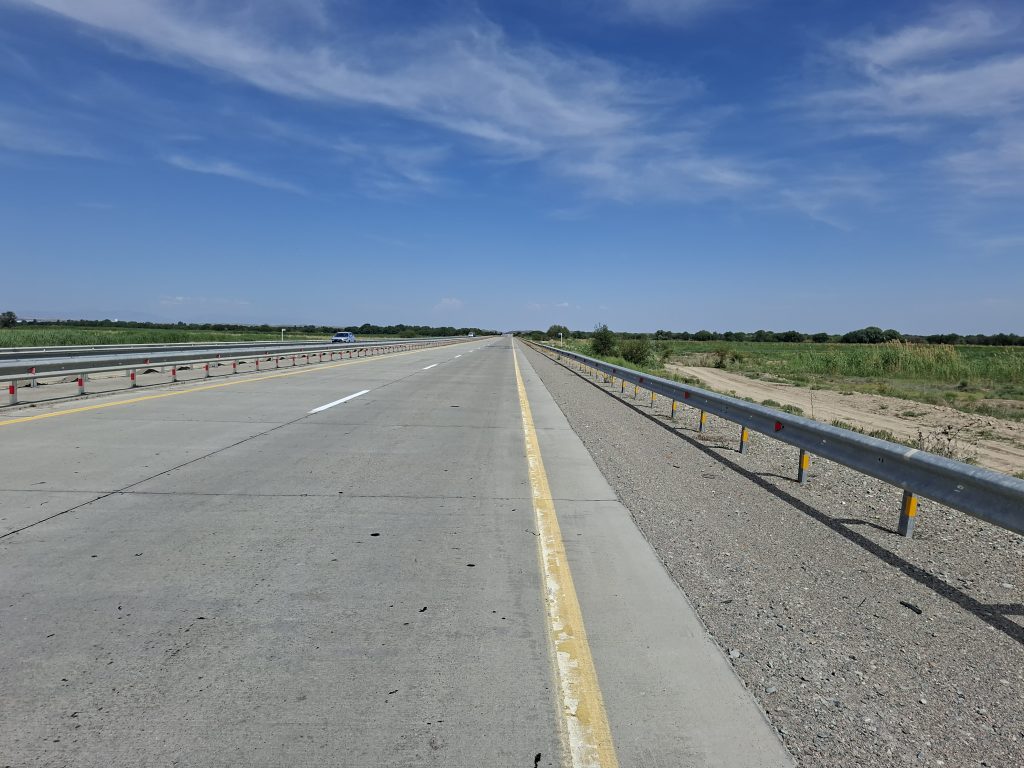
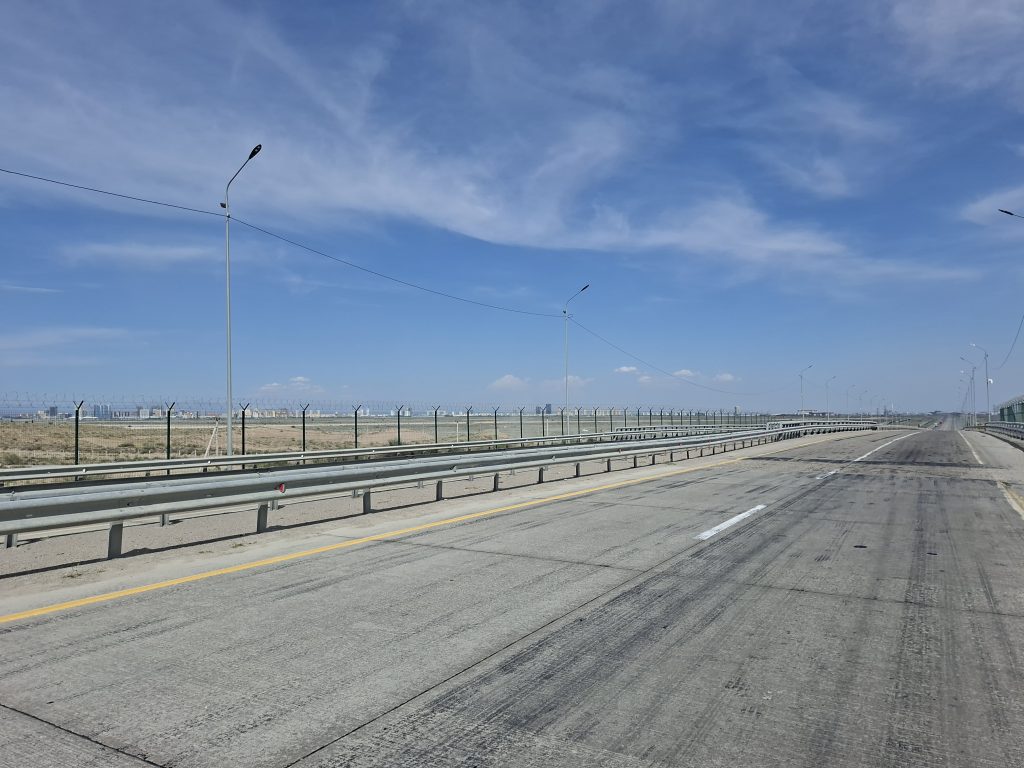
Thanks to the gentle downhill gradient, the kilometers flew by and soon I had reached the day’s lowest point — geographically speaking, of course. After that, progress became slightly slower and I started thinking about taking a break soon, especially since I had already covered more than 70 kilometers. Then came Kazakhstan’s farewell gift: a man stopped beside me, got out of his car, handed me a large bottle of sweet drink, and said something like “great, have a good journey” — at least that’s how I understood it — before disappearing back into his car before I could even take a photo. He was probably in a hurry and didn’t even ask where I was from, but he clearly still wanted to give me a gift.
I wasn’t very successful in finding a good resting spot for several kilometers afterwards, and then I met Mathis from France riding in the opposite direction. Naturally, both of us stopped, stood in the shade of the roadside trees, and chatted for quite a while. He’s heading toward Almaty and has taken an interesting approach: he ordered all of his equipment from a well-known Chinese online delivery platform and is now cycling westward, at least as far as Georgia if I understood him correctly.
We probably could have kept talking much longer, but it was time for me to continue because I didn’t want to arrive at the Chinese border too late. About 50 kilometers still separated me from it.
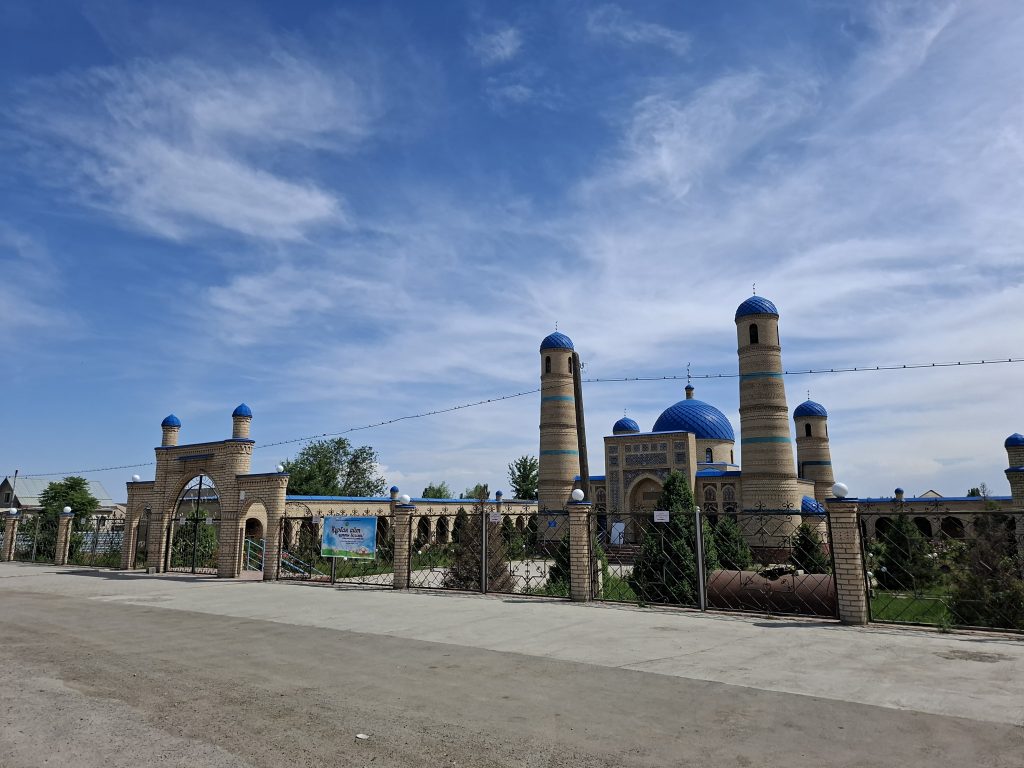
The route then passed through several villages before returning to the toll road again — this time via a staircase, meaning I had to lift my bike over the guardrails. That was probably the most exhausting maneuver of the entire day.
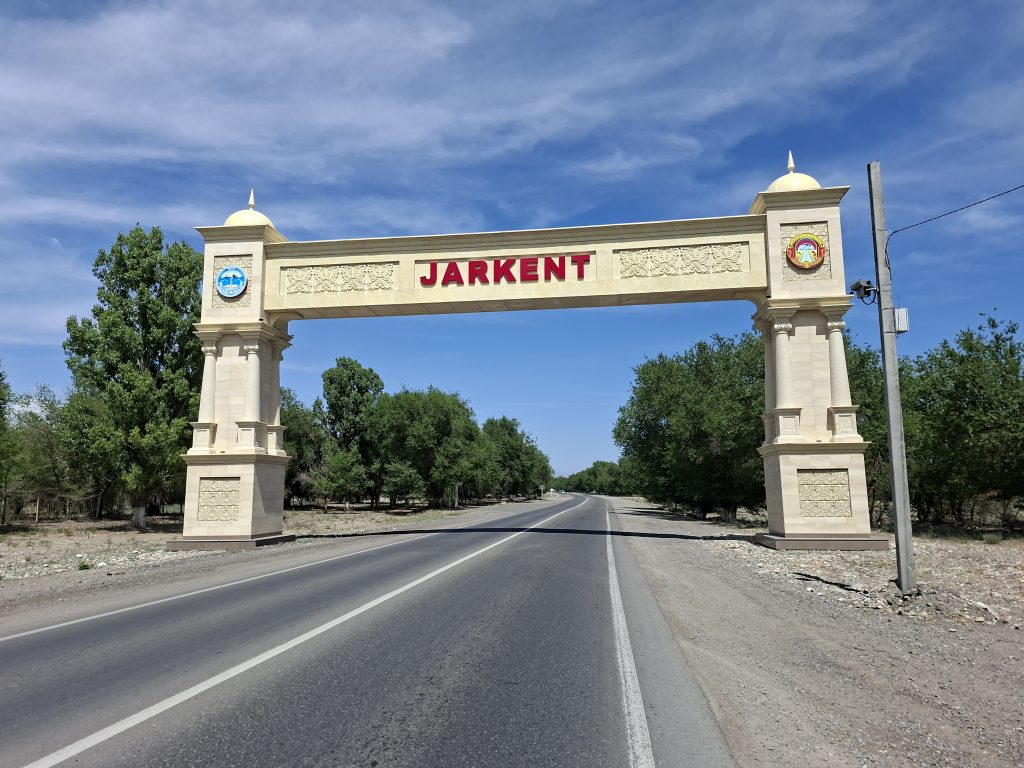
Shortly after 3 p.m. Kazakhstan time — or 6 p.m. Beijing time — I arrived at the border. Exiting Kazakhstan was relatively easy and uncomplicated, except that I had left behind a piece of paper at the place where I received my exit stamp, even though I should have taken it with me. That wasn’t clear to me at the time. After a few confusing minutes with the border officers — and what turned out to be my final use of Google Translate for the day — things continued smoothly and I was able to ride my bike toward the Chinese side.
The Chinese border officers were all incredibly friendly to me, and it felt fantastic to finally communicate normally with everyone again without needing my phone for translation. The border control process also went much more smoothly than I had expected. However, I still had to remove all my bags from the bike and place them on a conveyor belt through a scanner, while I pushed the bike itself through a metal detector and was then scanned myself, just like at an airport. When I started remounting the bags, one officer told me not to bother too much because I would soon have to put everything through another scanner anyway. The officers even helped me carry all my bags and the bicycle afterward.
There weren’t many people, yet I still had to wait several minutes because the person before me seemed to be a more complicated case. When it was finally my turn and I explained that I had family in China, everything immediately became clear for the officer and no further questions were asked. He spent some time typing on his computer, but that was probably just standard procedure. Then I received the stamp and was allowed to enter.
All my luggage went through a second scanner, and then I was through. I didn’t have to open any bags or answer strange questions, and because I spoke Chinese, I could clearly feel that all the officers were friendly toward me and genuinely wanted to help me. As a result, the entire immigration process took “only” a bit more than one hour instead of the 3.5 hours I had once read about from another cyclist. Still, I felt somewhat tired and slightly exhausted afterwards.
After crossing the border, I rode toward the hotel that Jiabin had booked for me. I used Amap, the Chinese equivalent of Google Maps, which is only available in Chinese. I wasn’t entirely comfortable using it yet, but I’ll get used to it, and in the end I successfully made it to the hotel.
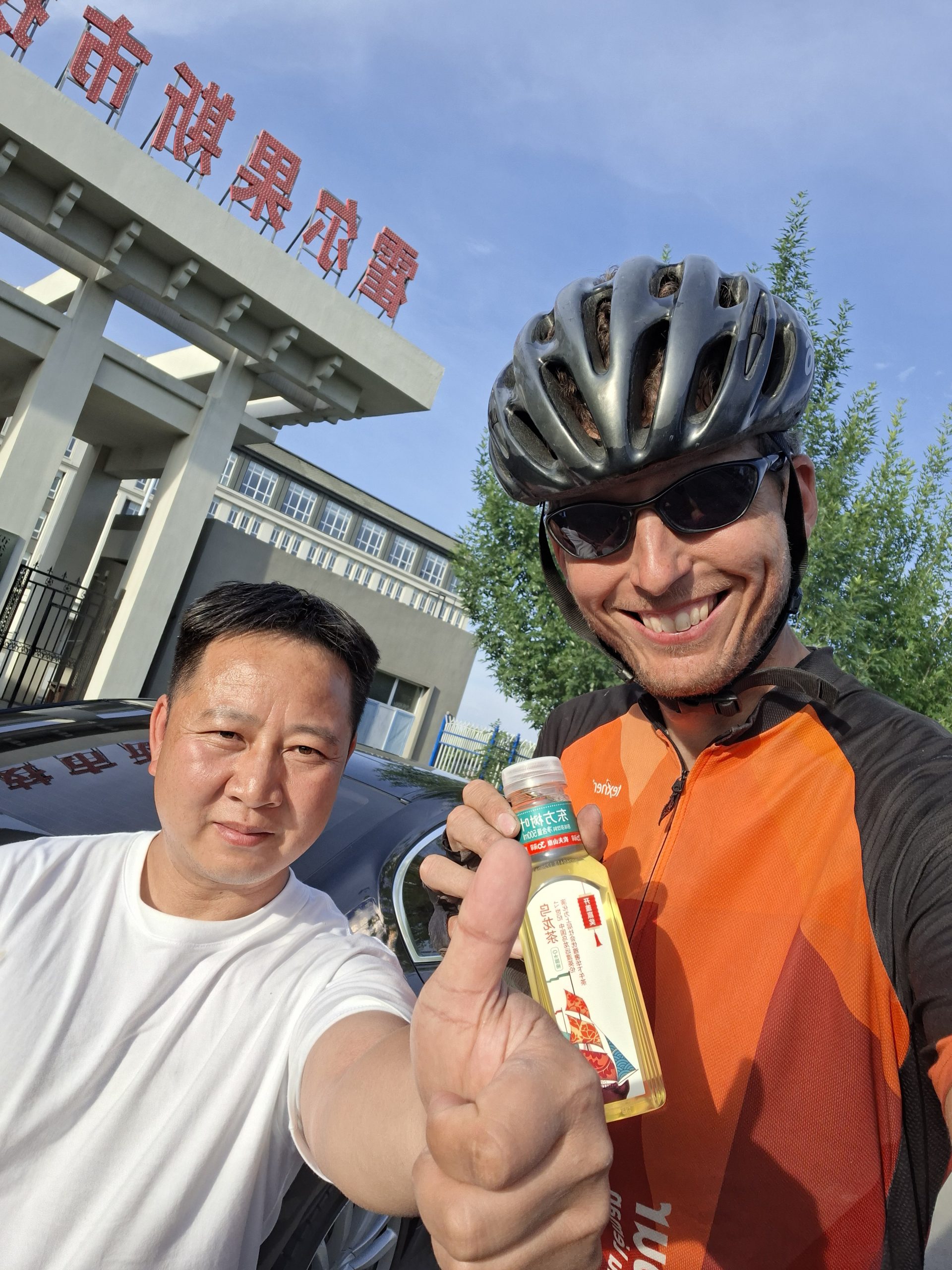
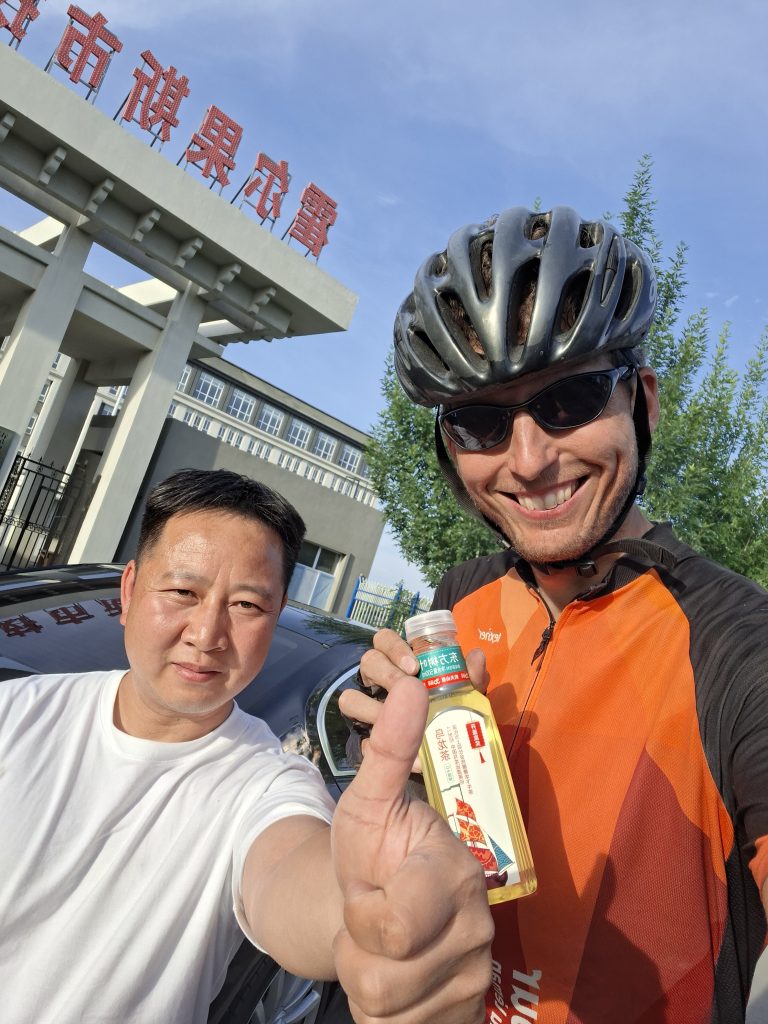
However, after barely four kilometers, a black BMW that I had already noticed behind me for several hundred meters overtook me, stopped ahead of me, and a man stepped out asking me to stop. First, he gave me a drink as a welcome gift, and afterwards we exchanged contact details. Harry told me to contact him if I had any problems. He also mentioned that he used to cycle a lot himself and also uses Strava. Naturally, I spoke Chinese with him as well, and just like at the border, I once again felt how wonderfully easy communication had suddenly become — it was like another world.
The same feeling continued during check-in at the hotel: the two receptionists initially looked somewhat shy when they saw a foreigner entering. But as soon as I started speaking Chinese, they visibly relaxed, and I simply thought to myself: “Man, it’s wonderful how easy everything suddenly is here.” Traveling like this feels completely different. I’m still a foreigner, of course, but somehow everything feels a little less foreign.
In the evening, while I was having a video call with Jiabin and her family to celebrate my arrival in China, Harry messaged me asking whether I had already eaten. I said no and added that I don’t eat meat. He immediately replied that we could go together and that he would pick me up at my hotel. What luck! It was already very late — around 11:30 p.m. — but Harry said we would surely find a restaurant still open. We drove to a completely different district because he explained that near my hotel there were mostly meat-heavy restaurants. Only the third restaurant we tried was open; the first two were closed. That wasn’t only because it was close to midnight, but also because today was an important Muslim holiday and many restaurants had remained closed all day. Harry ordered food for me and specifically made sure it wasn’t cooked with animal fat — many thanks for that care and consideration. When the food arrived, he told me to start eating because he had already eaten himself. So he had gone through all that trouble purely so I could have dinner. Wow! I finished both dishes completely — I was definitely hungry — and assured Harry that he didn’t need to order anything else because I didn’t want food to be wasted. After a bit of hesitation, he agreed, paid for everything — there wasn’t much I could do about that — and then drove me back to the hotel. He also apologized for not being able to say goodbye tomorrow because he has to work. He owns a company in the transport business. His truck drivers export electric cars and refrigerated goods to Kazakhstan. He told me that this is China’s largest land border crossing in terms of exported goods. The new Silk Road indeed.
I’m incredibly happy to have arrived in China and thus crossed the final border on the way to Shanghai. Since I already know the country a little, speak the language, and have family and many friends here, it almost feels a bit like “coming home.” And of course, Harry’s amazing welcome made the whole experience even sweeter. Coincidentally, he originally comes from a city in Ningxia Province, where relatives of Jiabin — and therefore of mine as well — live, whom we visited two years ago. Hard to believe.
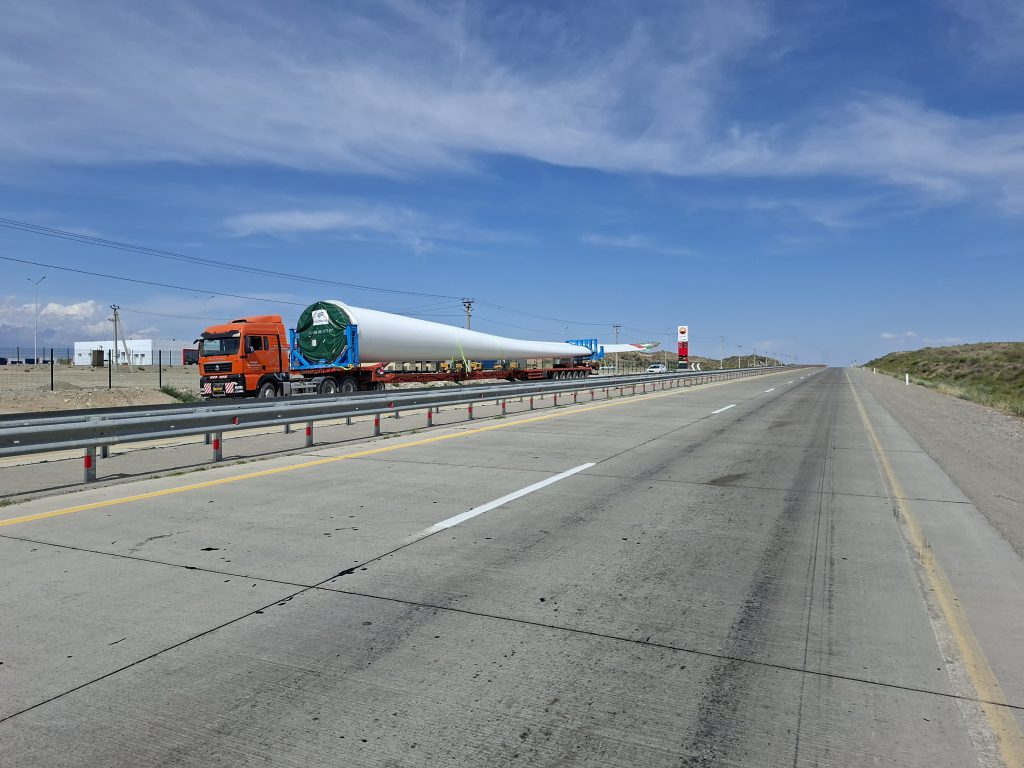
With today’s stage, I have now covered more than 8,000 kilometers. Not quite around the world in eighty days like Phileas Fogg in Jules Verne’s novel — but at least all the way to China. And now “only” 5,800 kilometers remain planned :-).



-
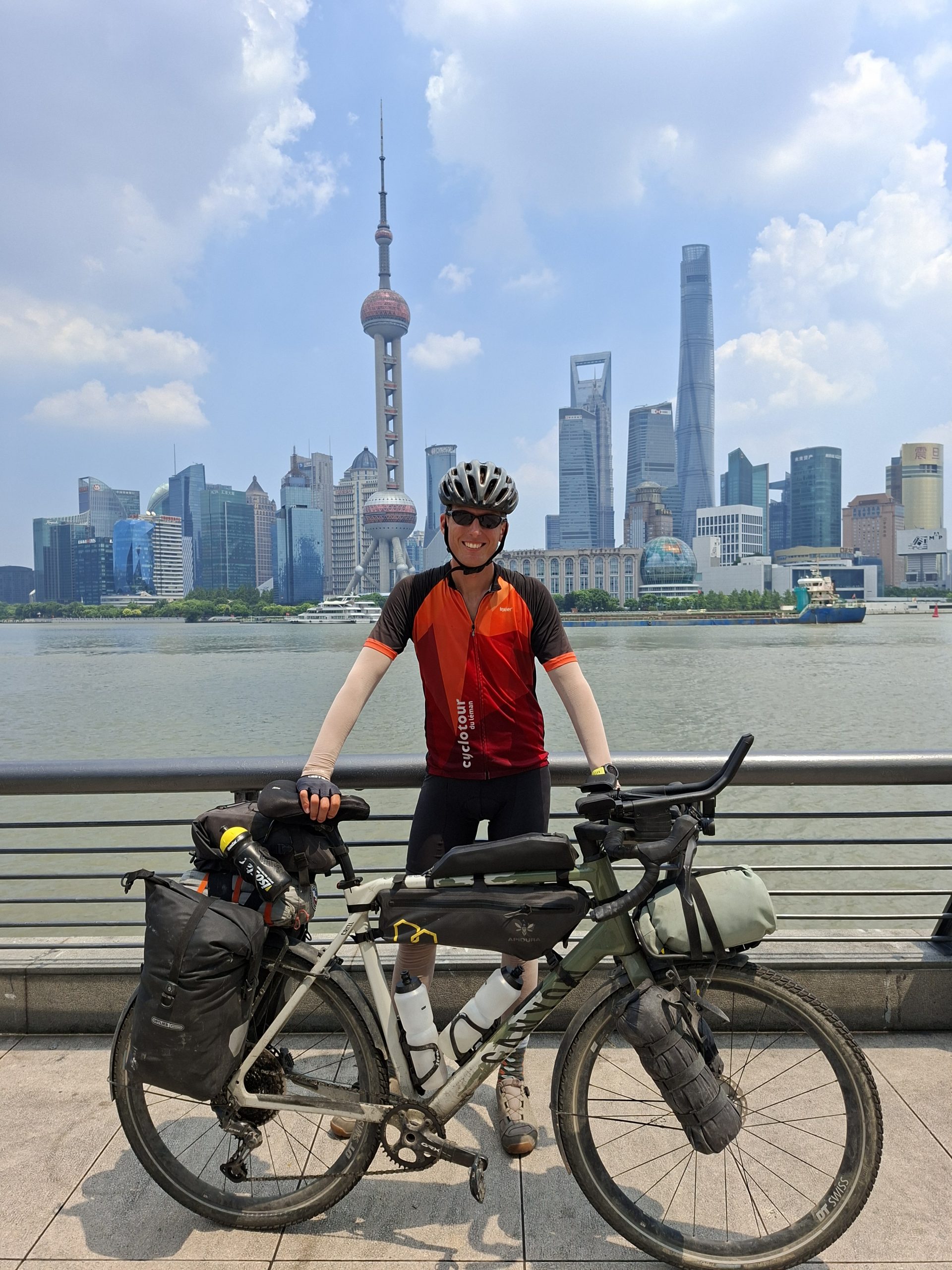
Day 145 – Kunshan – Shanghai (78.89 km / 246 m elevation gain
Und plötzlich angekommen Die Vorfreude auf die letzte Etappe war sehr deutlich spürbar. Doch auch heute liess ich mir am Morgen wieder viel Zeit, nur keine Hast für den letzten Tag. Beim…
-
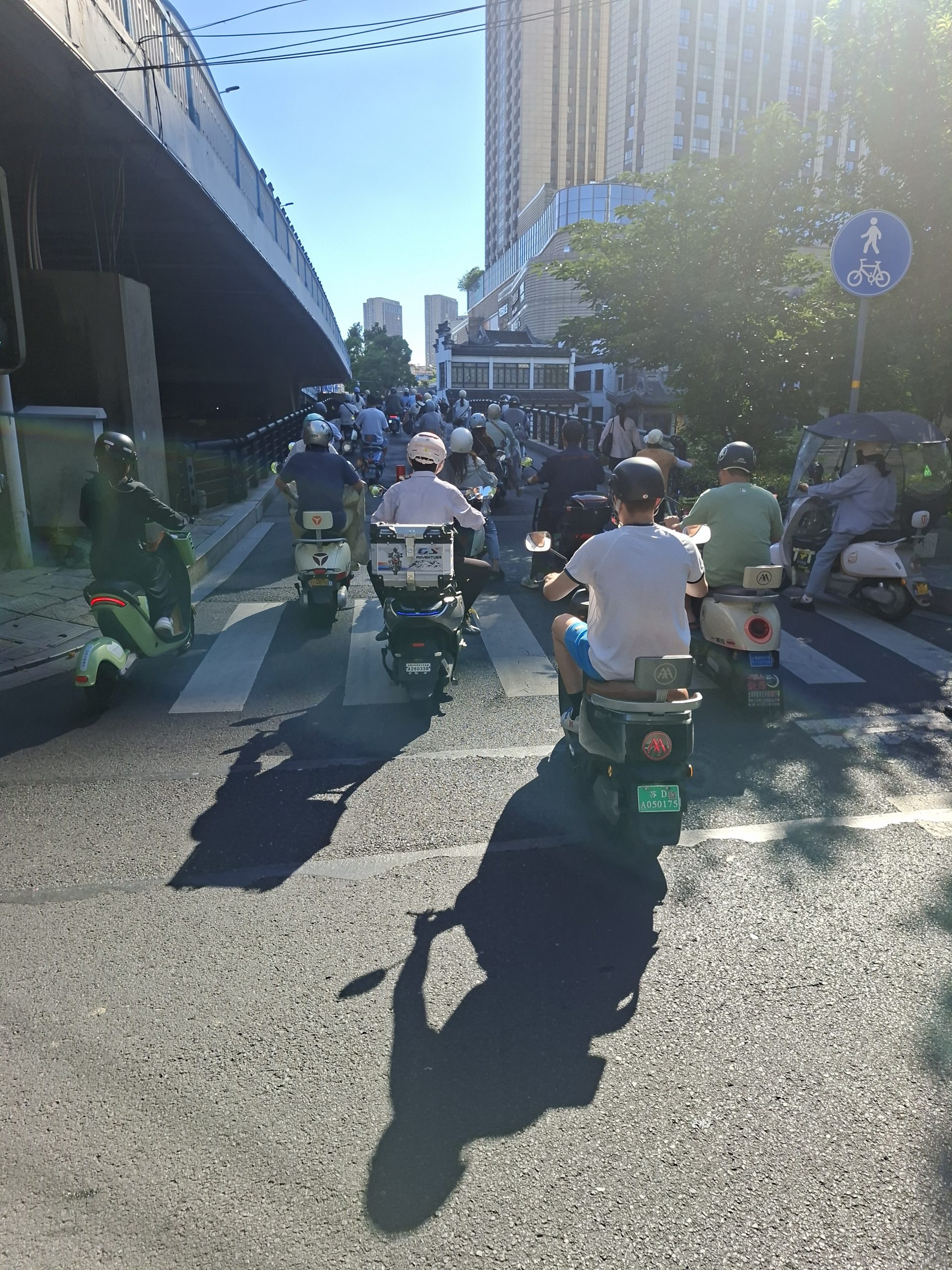
Day 144 – Changzhou – Kunshan (124.16 km / 365 m elevation gain)
Es ist noch heisser als gestern Gestern Abend ging ich bereits um 20:30 ins Bett – und wachte heute Morgen erst um kurz nach halb sieben auf, weil wir beide keinen Wecker…
-
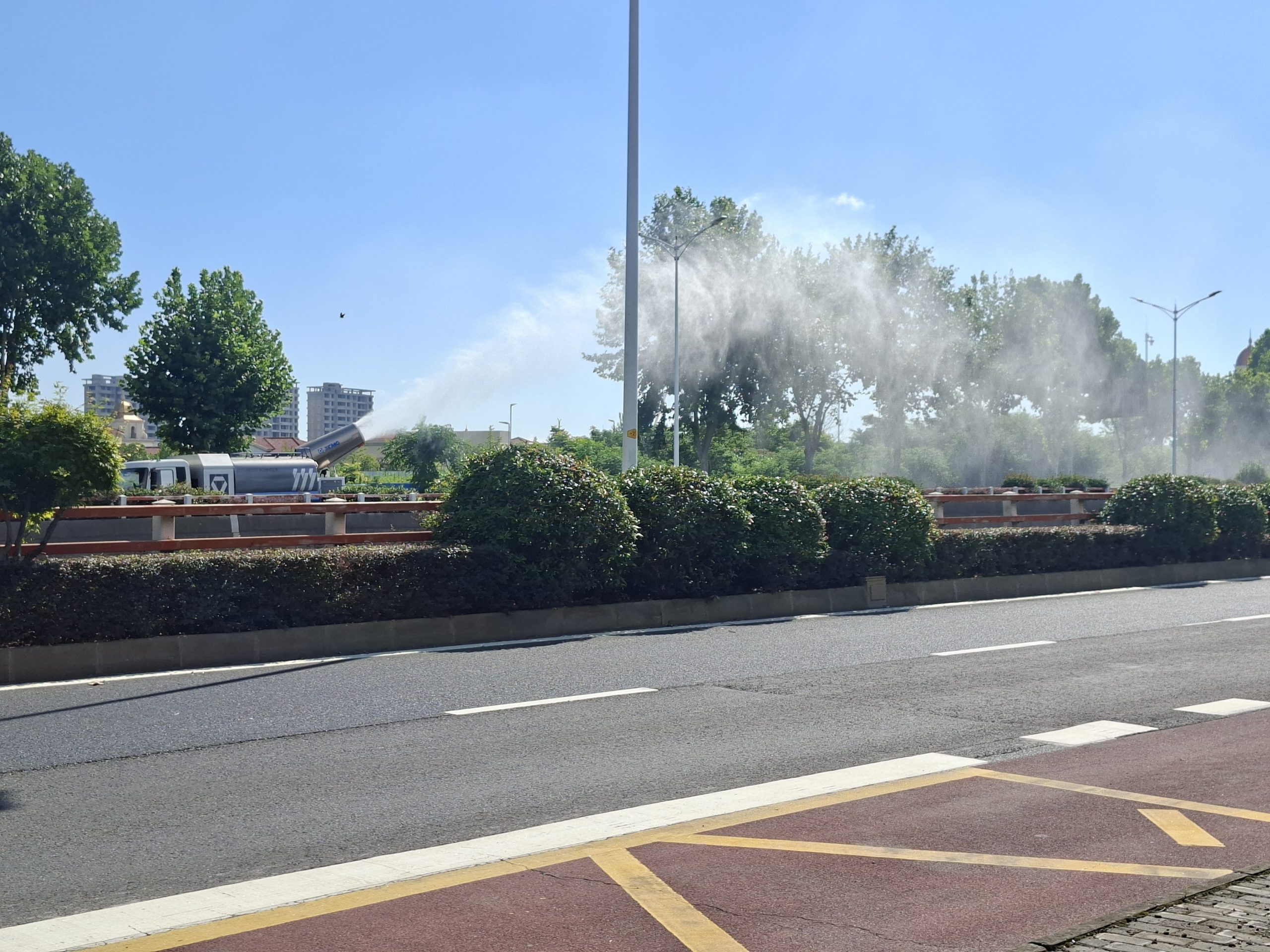
Day 143 – Nanjing – Changzhou (120.43 km / 443 m elevation gain)
Etwas am Limit was die Hitze betrifft Ich habe gestern Nacht sehr schlecht und wenig geschlafen. Einerseits wurde es viel später als gedacht – ich war wie (fast?) immer zu optimistisch, andererseits…


Leave a Reply