




Into the desert
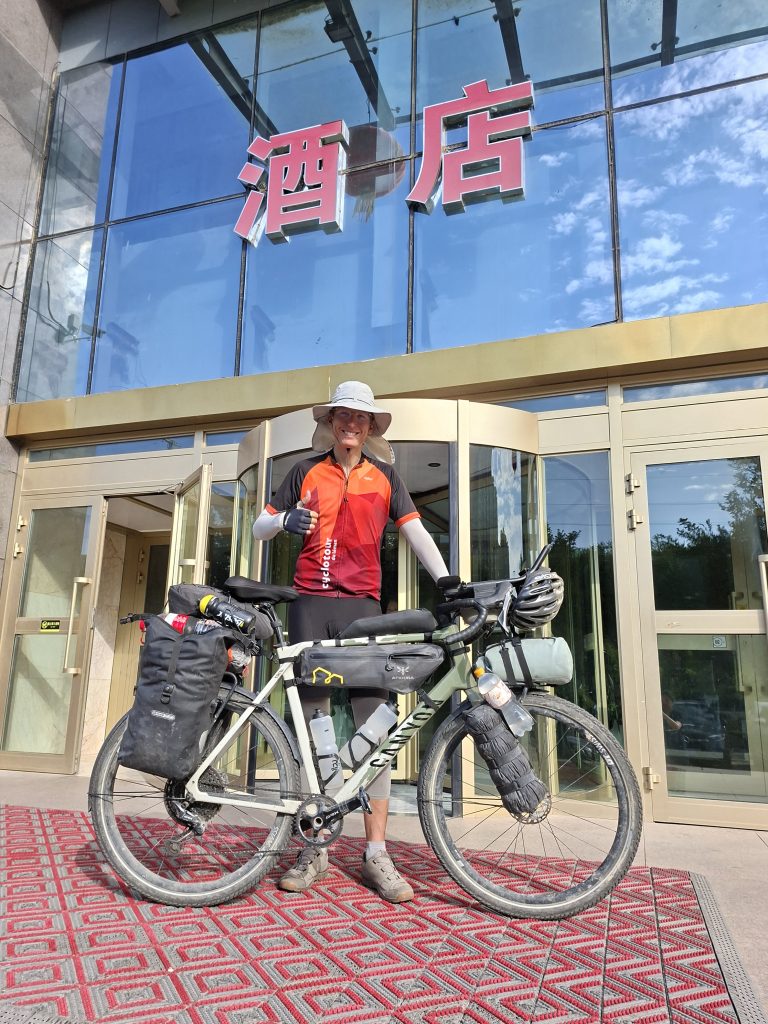
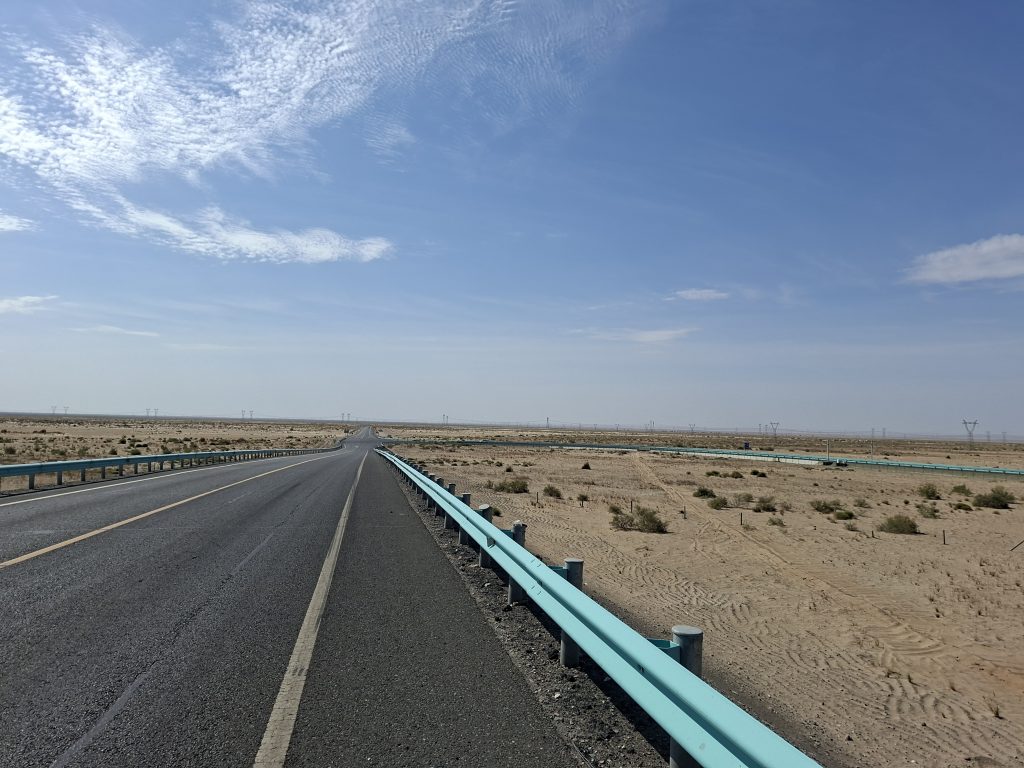
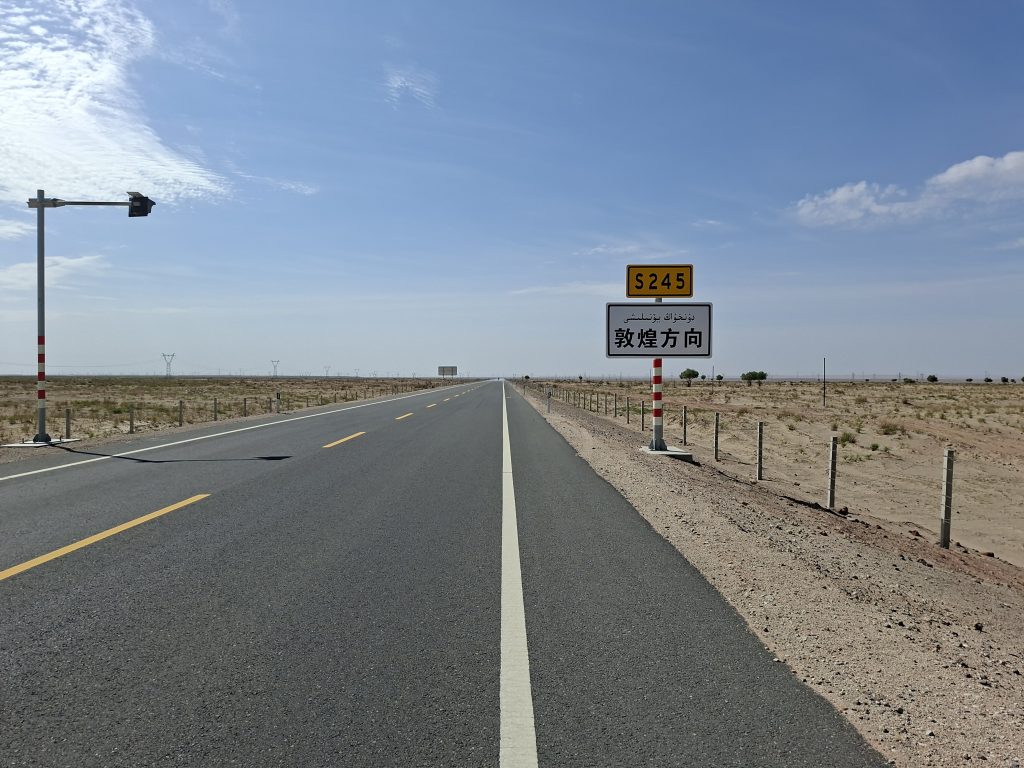
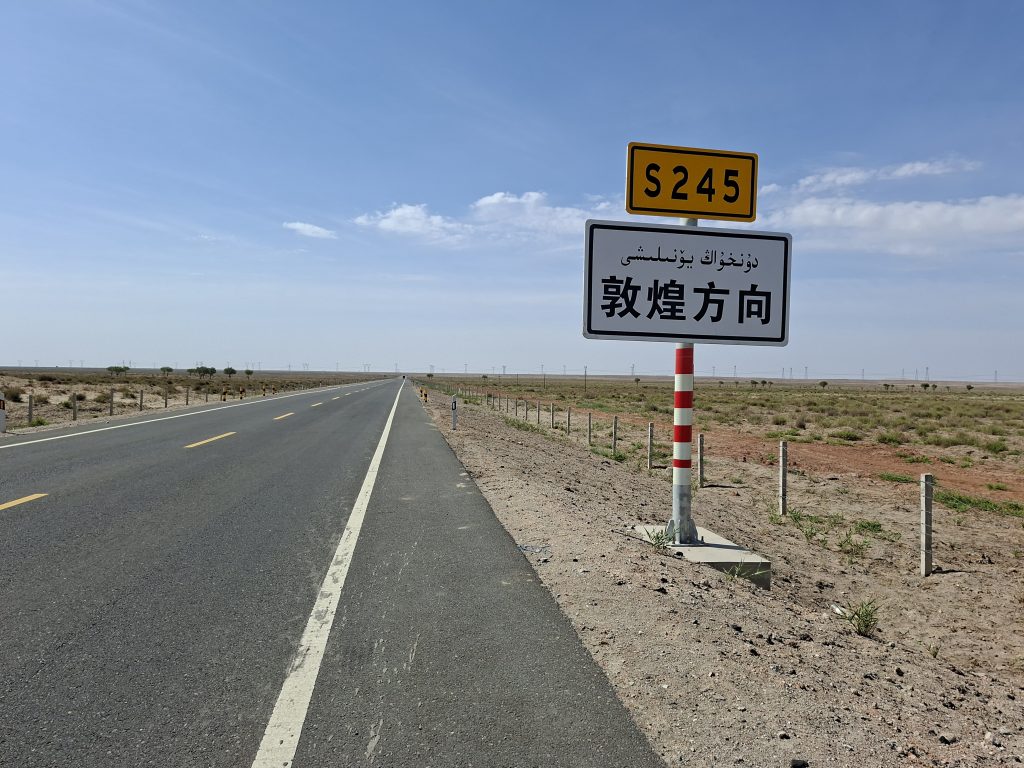
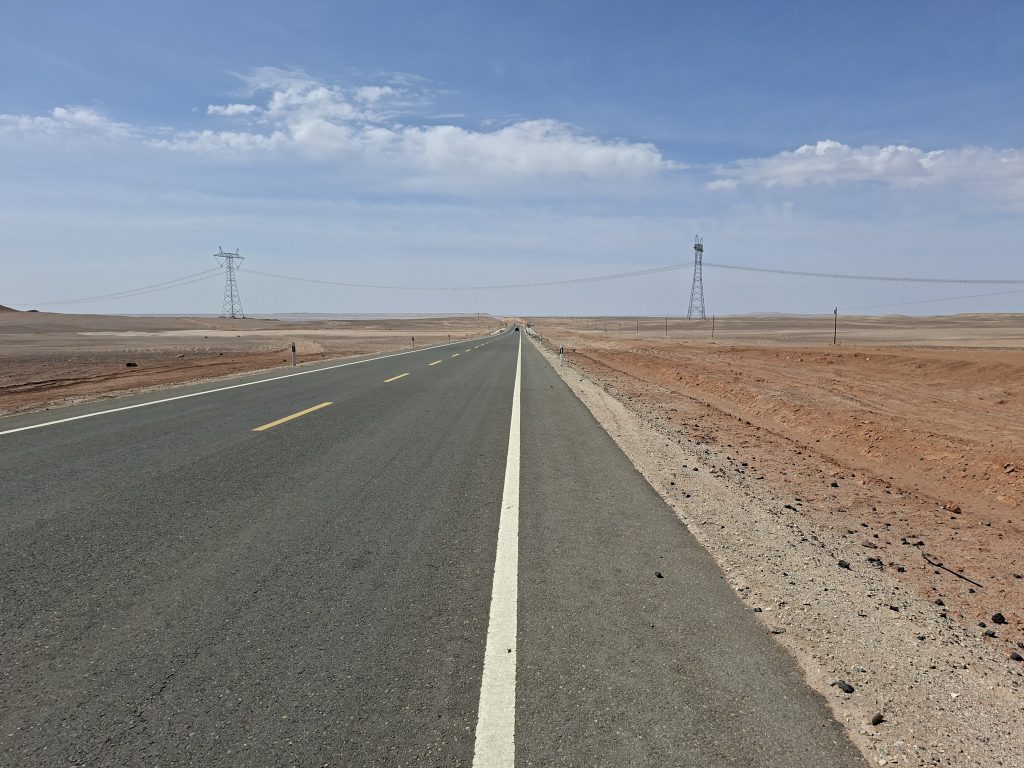
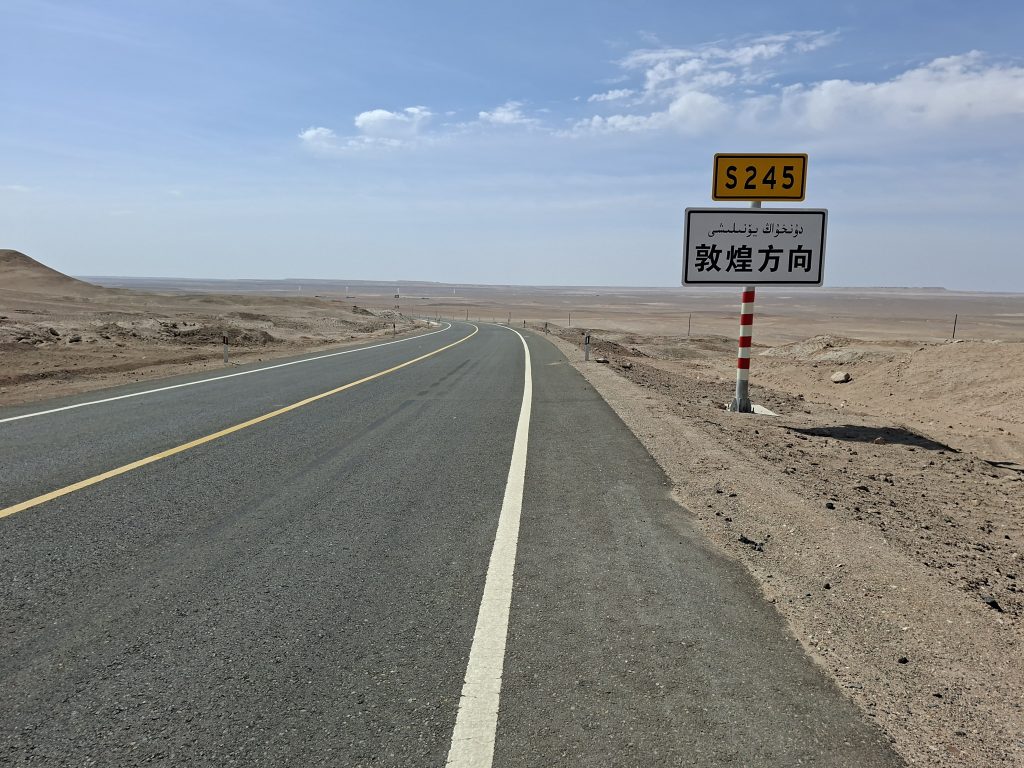
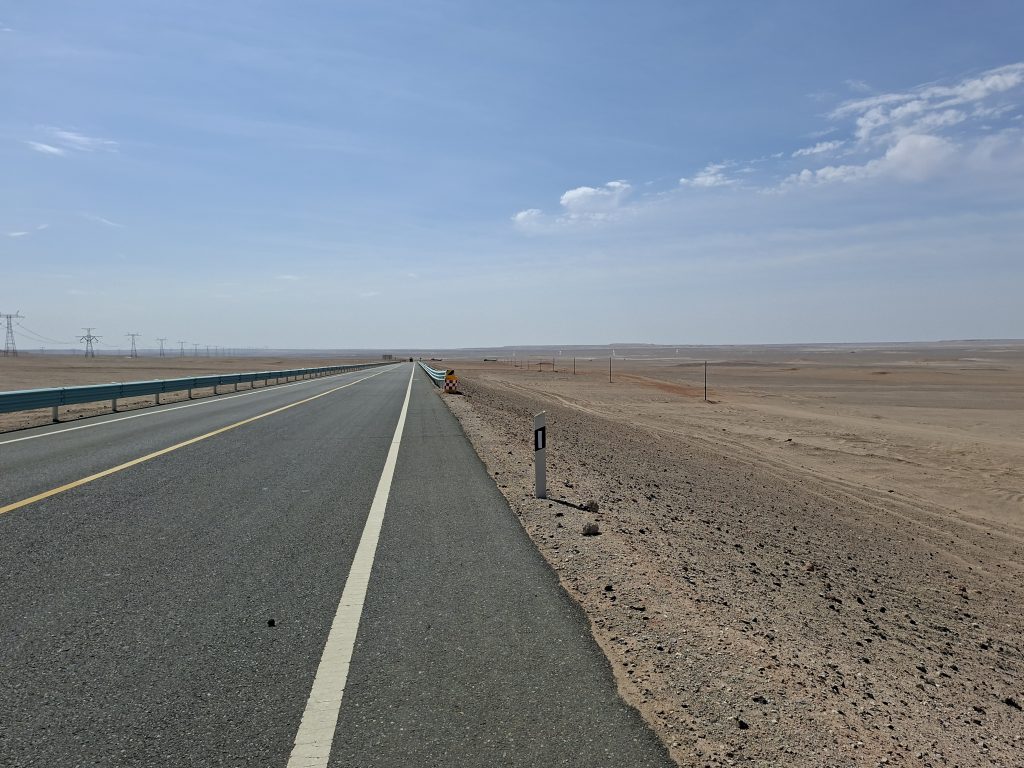
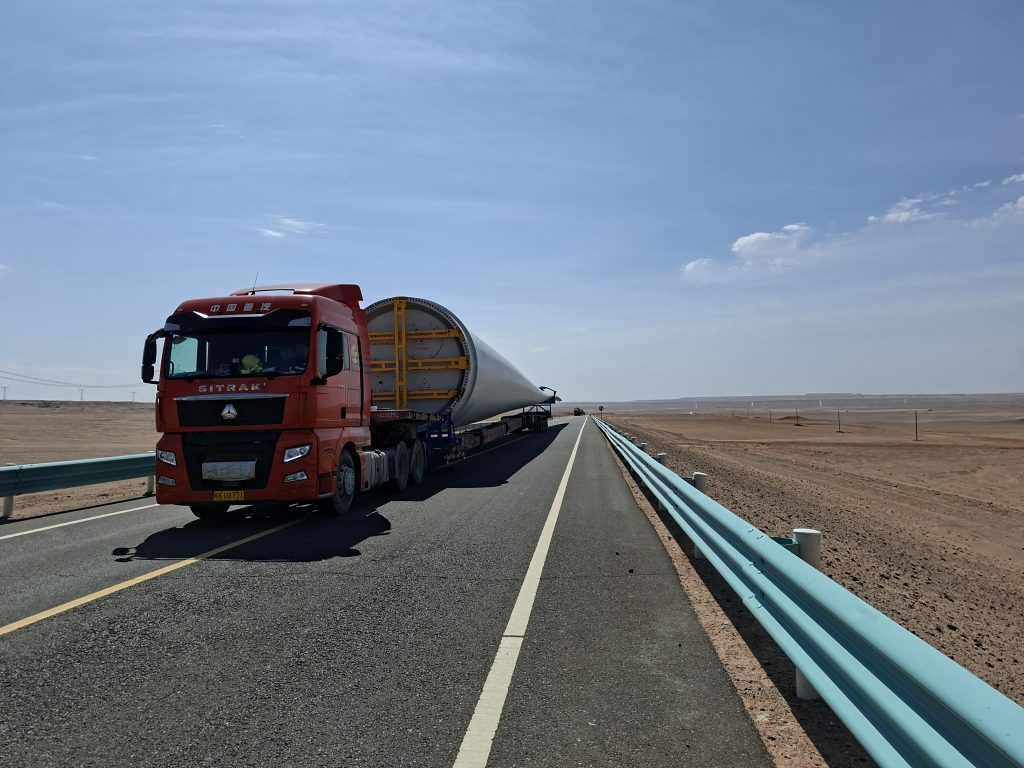
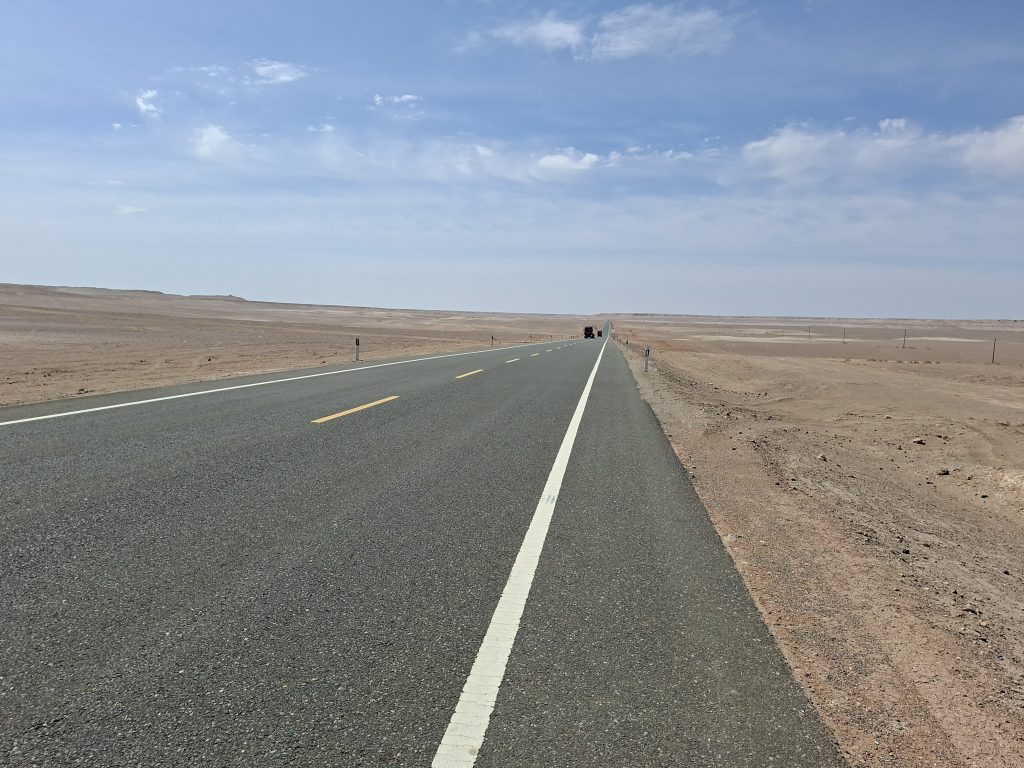
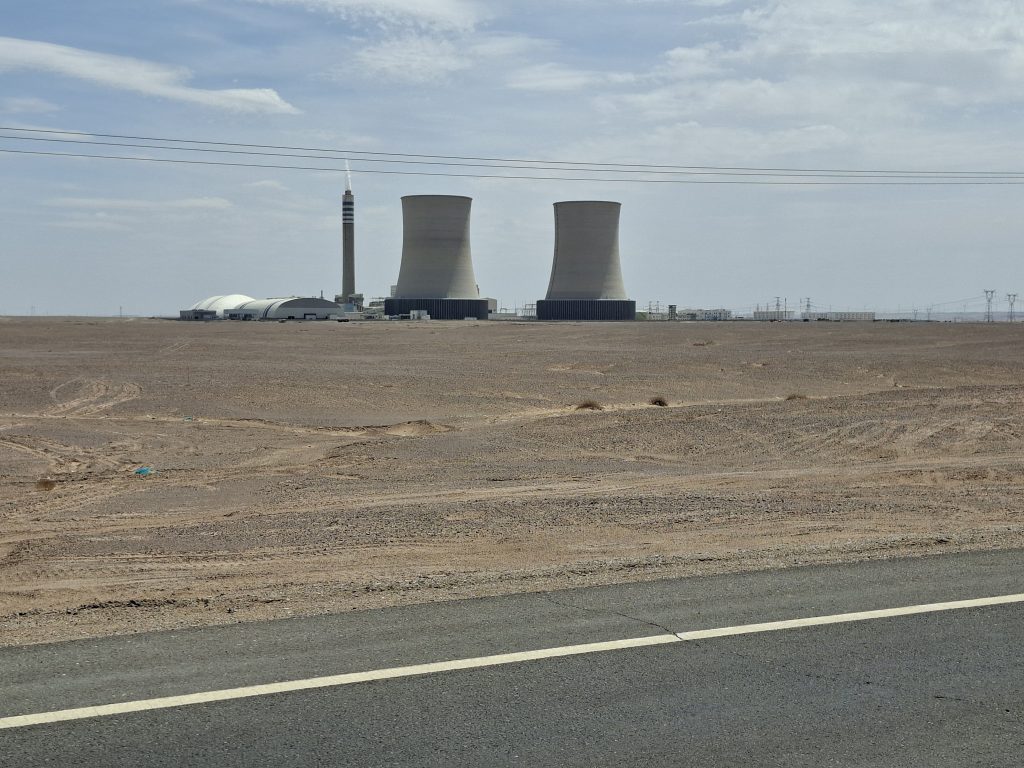
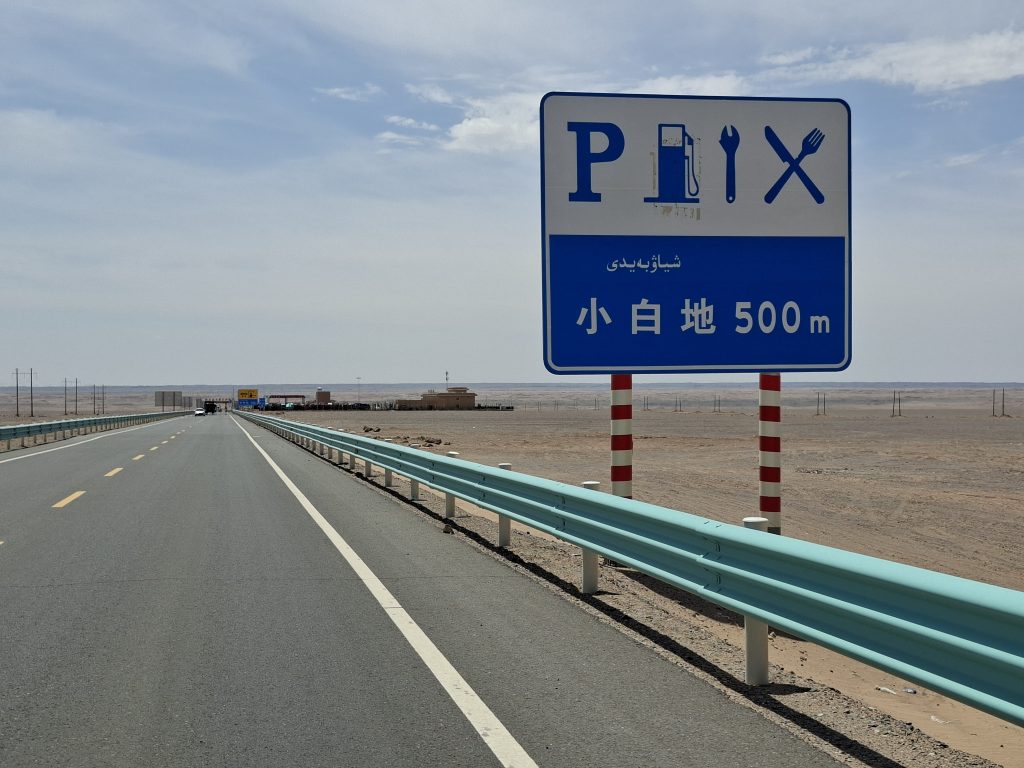
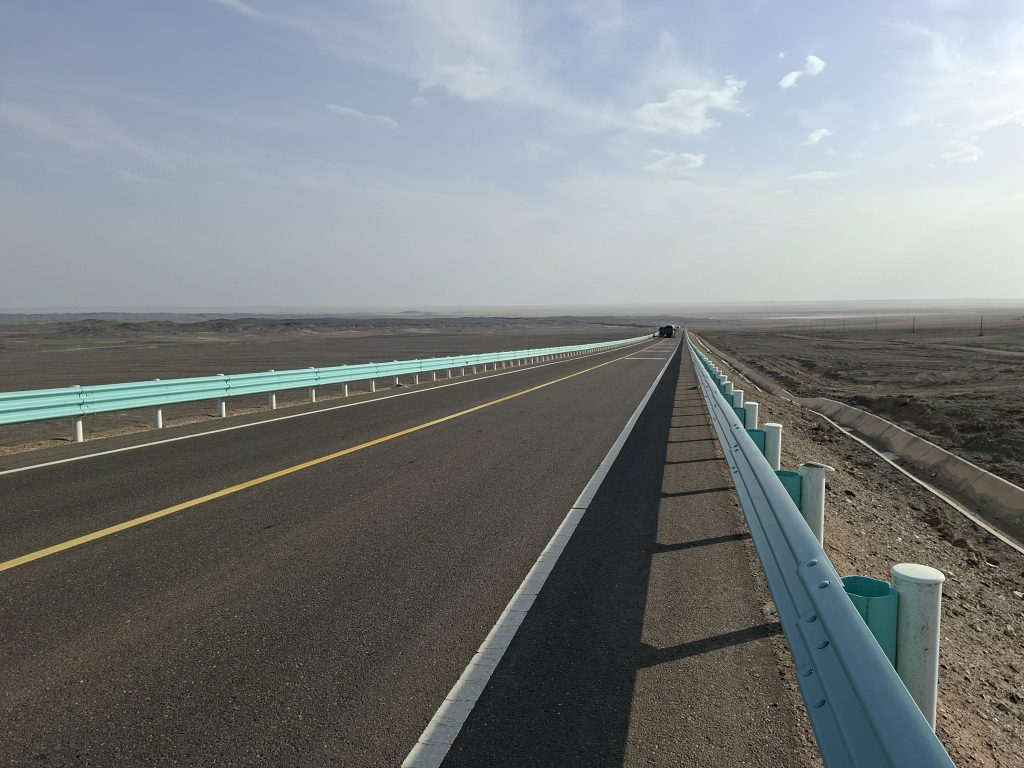
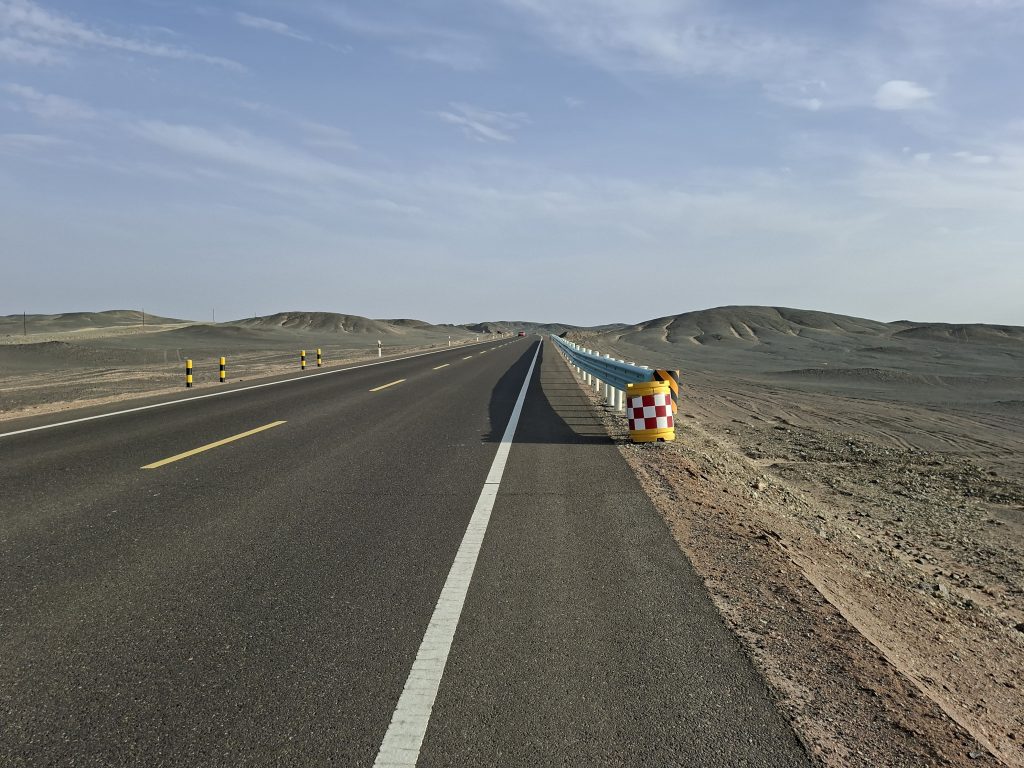
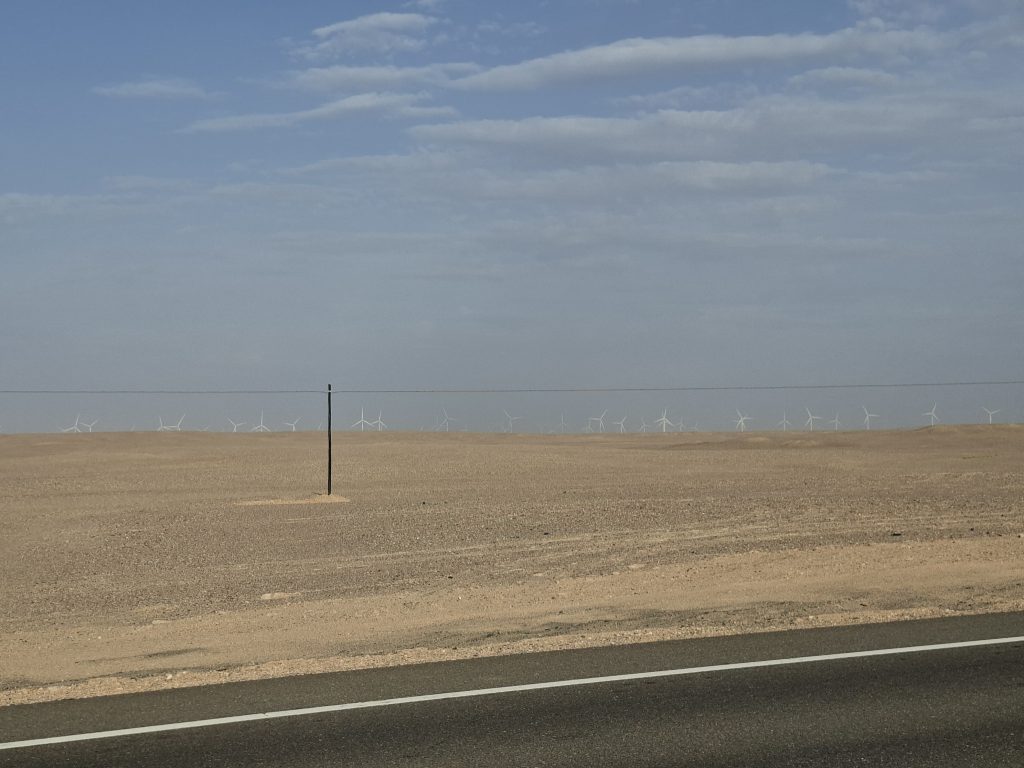
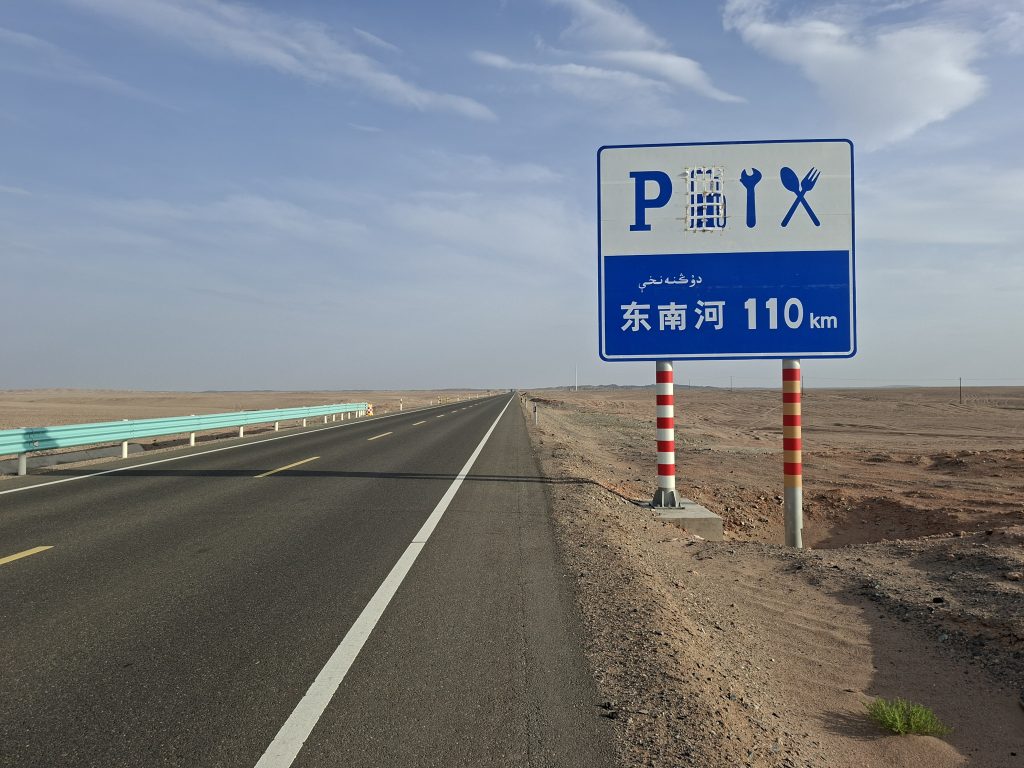
This morning, I began the adventure of crossing the desert from Hami to Dunhuang. Along the roughly 390 kilometers through the Kumtag Desert, which is part of the Gobi Desert, there are only two service stations, each with a restaurant, a small shop, and toilets. Apart from that, there is nothing. This makes advance planning for food and water supplies much more important.
Shortly after nine o’clock, I set off carrying a full load of supplies. The temperature was still pleasant at that time, though it was probably already close to 30°C. Over the past few days, afternoon temperatures in Hami had reached as high as 41°C, but once again I was lucky, because today it was “only” about 36°C. Over the next two days, temperatures are expected to be even lower, reaching only around 29°C—actually cooler than back home in Switzerland, which is currently experiencing a heatwave.
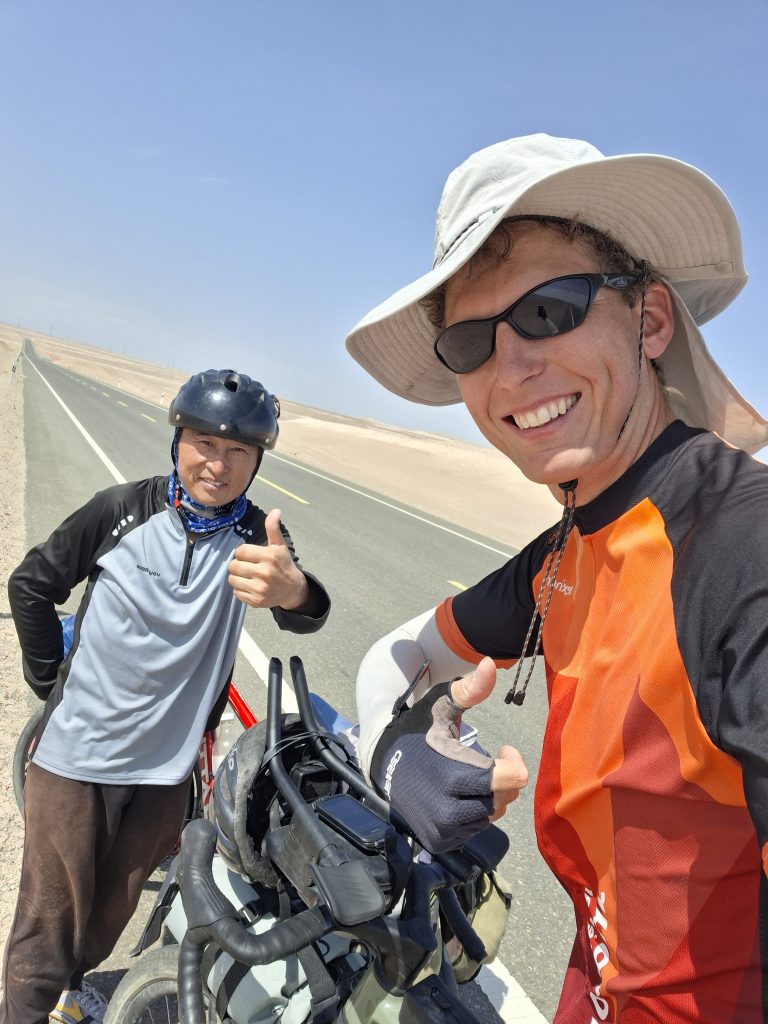
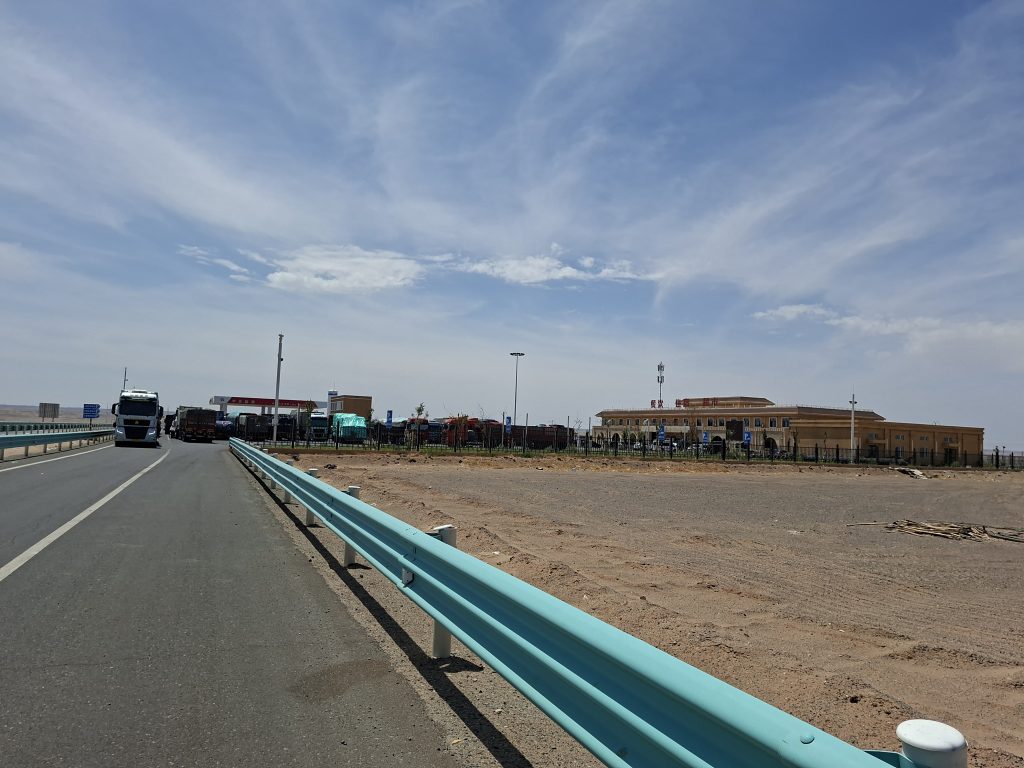
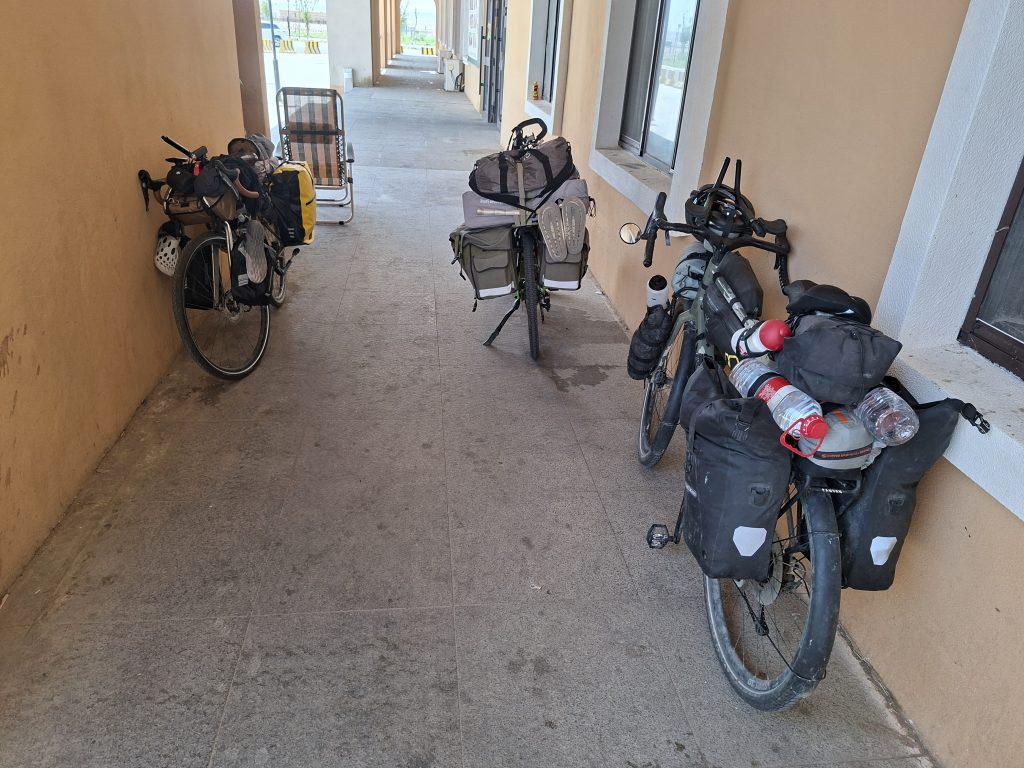
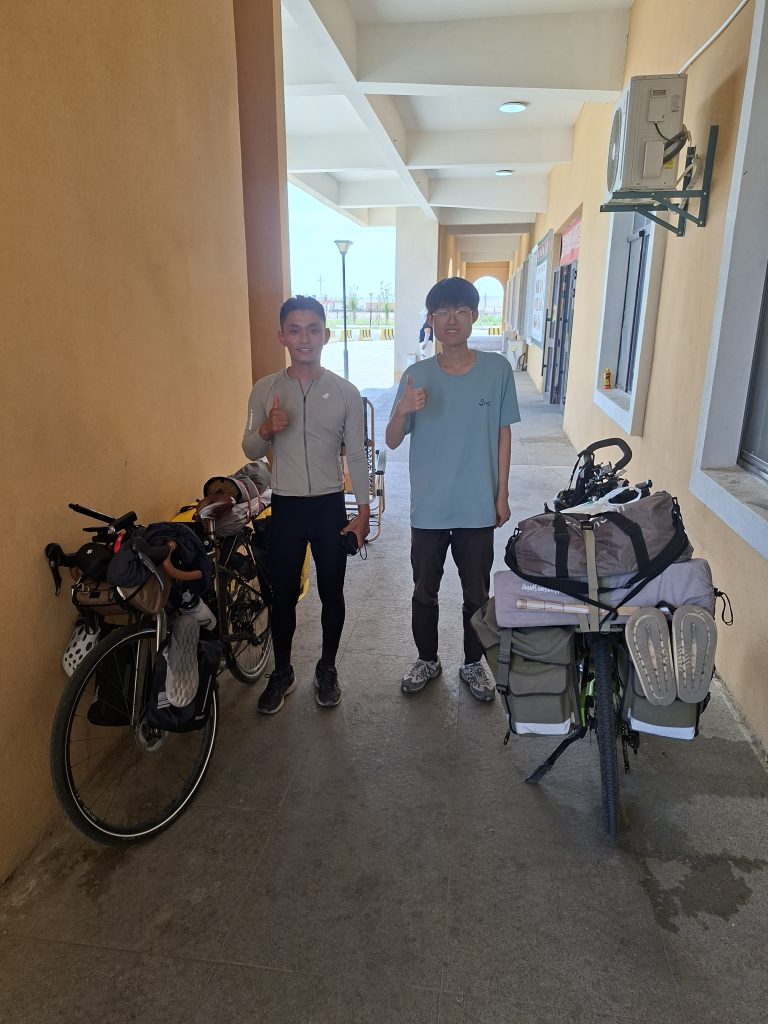
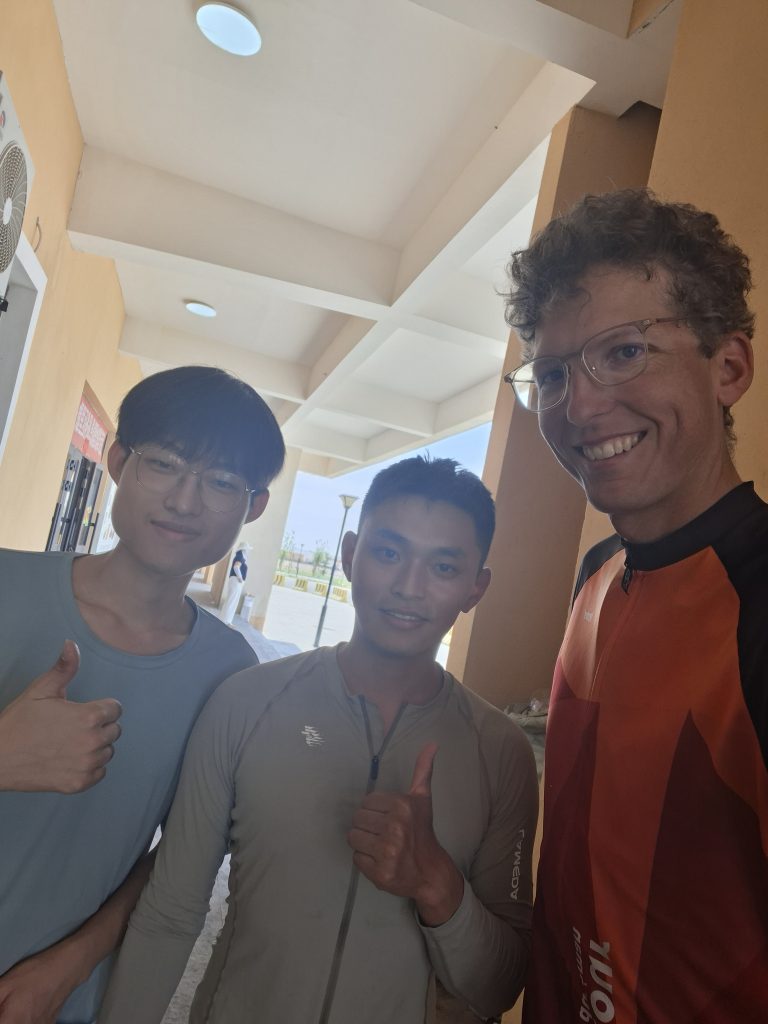
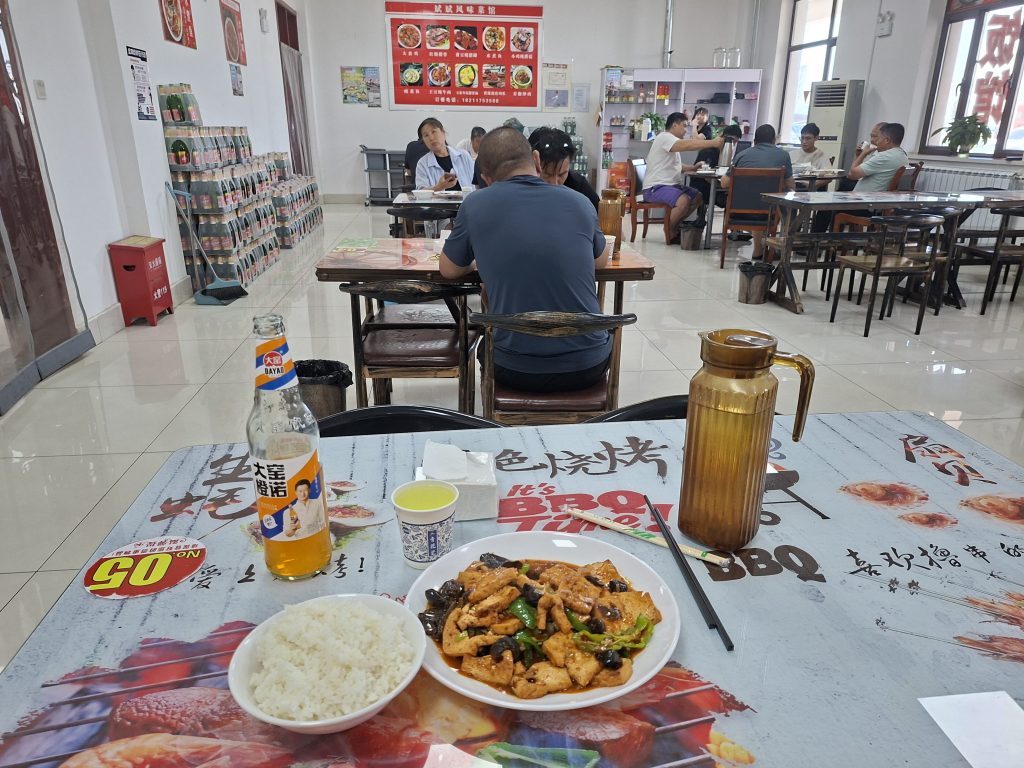
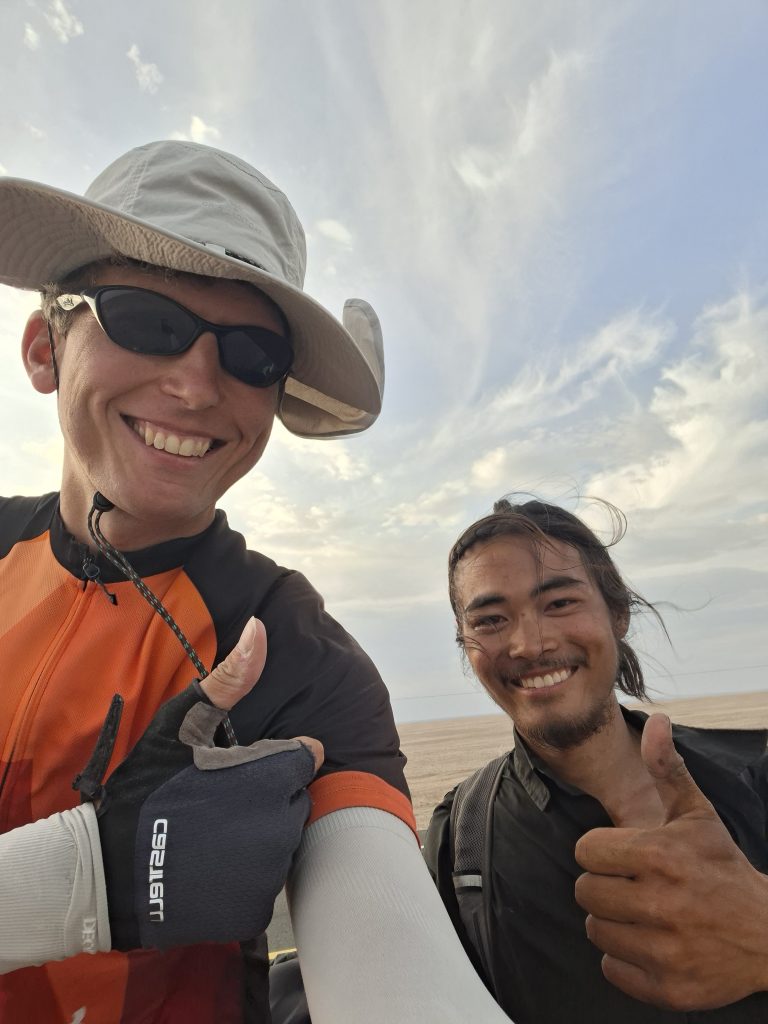
However, 36°C in a place where there is no shade at all is still more than hot enough. After just under 47 kilometers, I met Yongming from Liaoning. The 58-year-old is already retired and is now touring across China by bicycle. He was very talkative and reminded me to be careful in this heat. I would have liked to continue talking with him, but without the cooling effect of riding, it felt even hotter, so I decided to keep moving. I reached the first service station shortly after 1 p.m. I took my time to rest properly and had something to eat in the restaurant. While there, I had to show my passport to the owner, as the police apparently want to know which foreigners pass through. Upon arrival, I had already noticed two bicycles and parked mine beside them. After ordering food, I went back to my bike and met the two Chinese cyclists who owned them. I ended up talking quite extensively with Kai in particular. Afterwards, the two of them continued riding toward Hami.
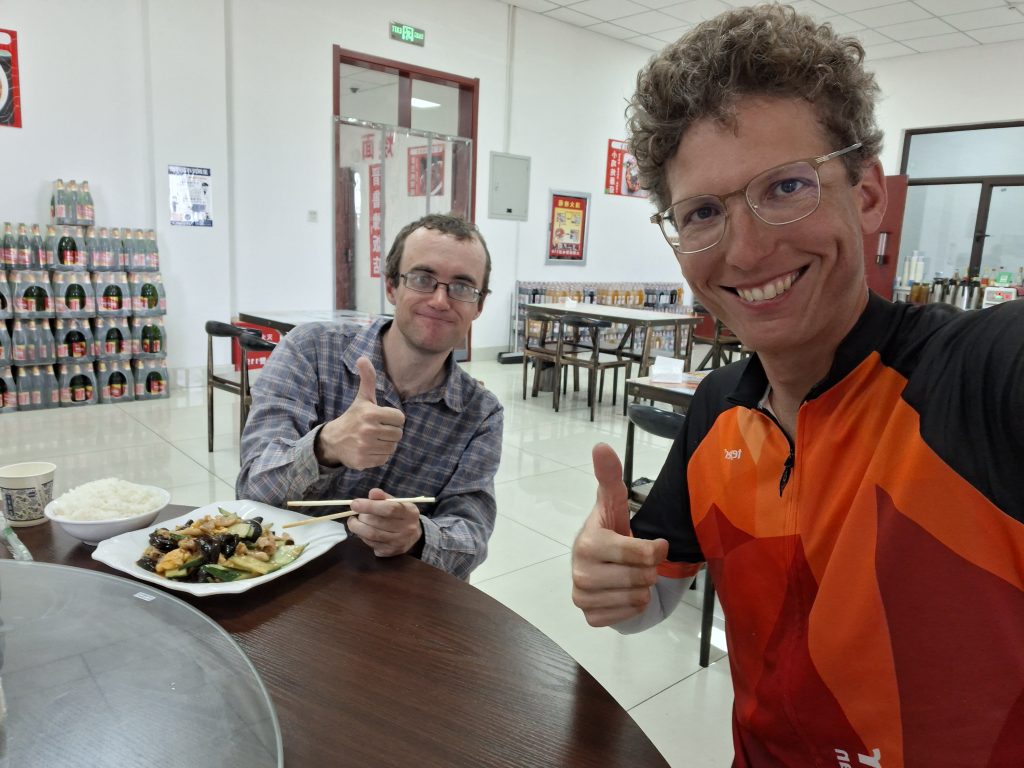
After I had finished eating, the next cyclist arrived: Jonny from England, who was traveling from south to north. I kept him company while he ate. He told me that before reaching this desert section, he had gone a very long time without meeting other cyclists, but here he had encountered quite a few. Apparently, everyone has to pass through this route. He also mentioned that two Chinese cyclists would be coming along later, as they had stayed at the same place as him the night before.
At around 5:45 p.m., I continued my journey. The worst of the heat had passed, and temperatures were gradually falling. At the toll station, I once again had to show my passport. The employee explained that the police needed to know which foreigners were traveling through the area. He asked whether I had enough drinking water with me, and I replied that I was carrying a little more than eight liters, which should be sufficient. He then reminded me not to exceed the speed limit of 80 km/h and added in a somewhat more serious tone that I should always stay on the shoulder and ride carefully.
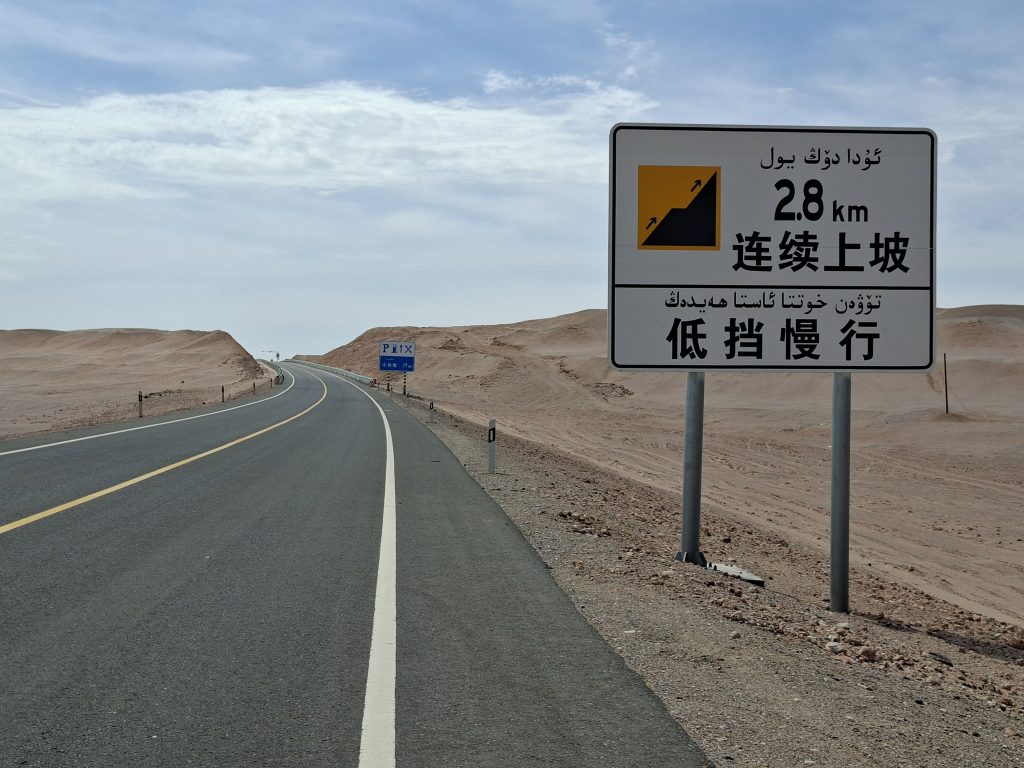
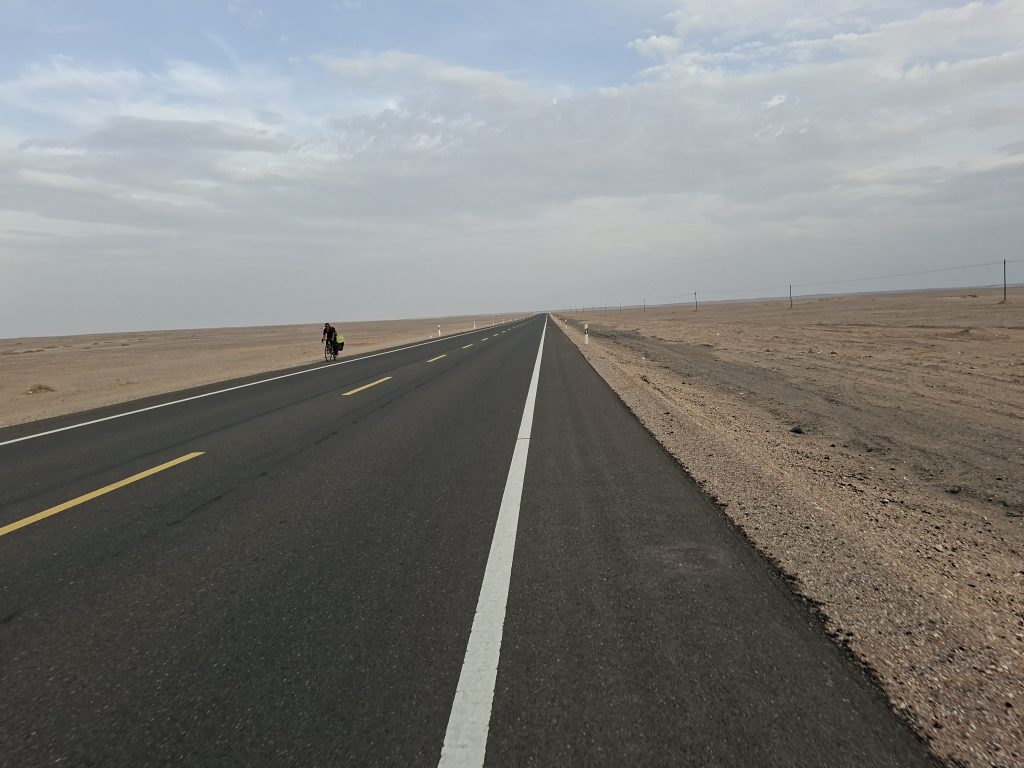
The two Chinese cyclists who had been mentioned earlier appeared about 20 kilometers later, one after the other, just as I was cresting a small hill. I exchanged a few brief words with the first one, while with the second I simply called out my good wishes as we passed.
From then on, everything went extremely well because I had a strong tailwind. I only truly realized how powerful it was when, after about 118 kilometers, I stopped to speak with another Chinese cyclist coming from the opposite direction. The wind was astonishingly strong, and even more astonishing was the fact that I had hardly noticed it while riding. During our brief conversation, I learned that he came from Henan Province—Jiabin’s home province—more specifically from Zhumadian. He was riding a huge loop around China, having started in Guangdong in the south, and planned to continue through Xinjiang and onward toward Tibet.
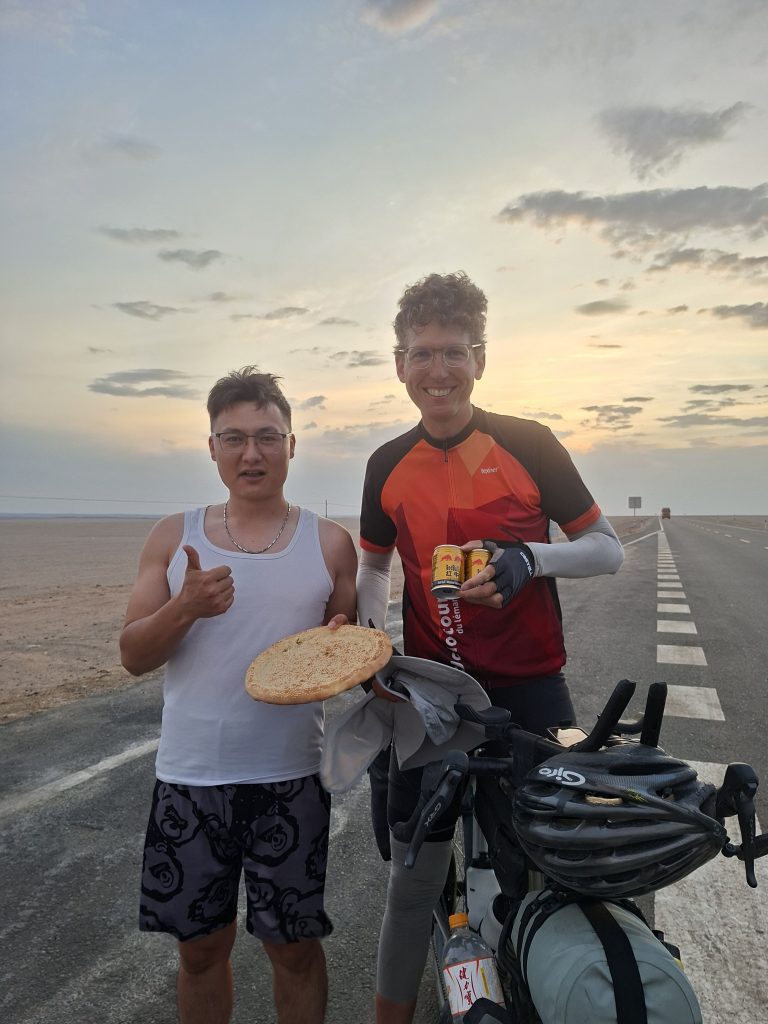
Since the tailwind was so favorable and I was still feeling very strong, I decided to ride a little farther than originally planned. Suddenly, a car slowly overtook me and asked whether I had enough drinking water. I answered that I did. Nevertheless, the young driver stopped at a parking area about a kilometer later and curiously asked about my journey. In the end, he insisted on giving me two cans of Red Bull and a loaf of bread, which I gratefully accepted.
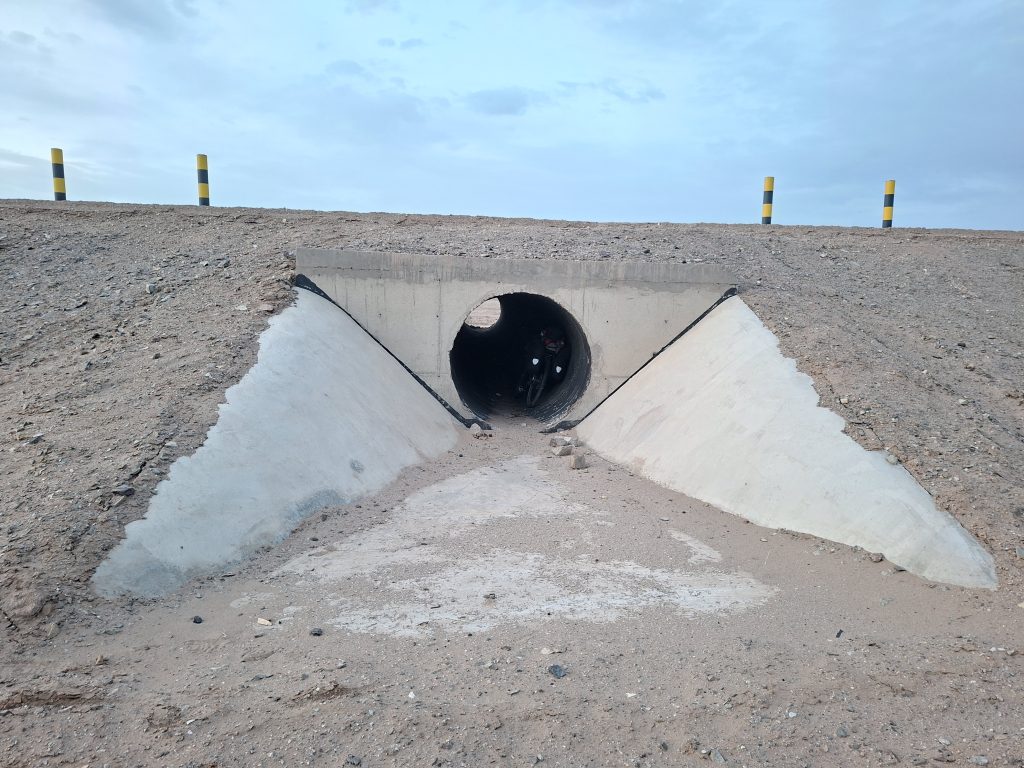
By then it was already shortly after 9 p.m., so a little later I stopped and set up my overnight camp in a small underpass beneath the road. Here I am protected from the wind and do not even need to pitch my tent. Finding such a place had been my plan from the beginning, and it was not difficult, as there are many similar passages beneath the road. Now I am curious to see how well I will sleep here. Tomorrow, it is about 80 kilometers to the second service station, where I will once again be able to restock food and supplies.


-
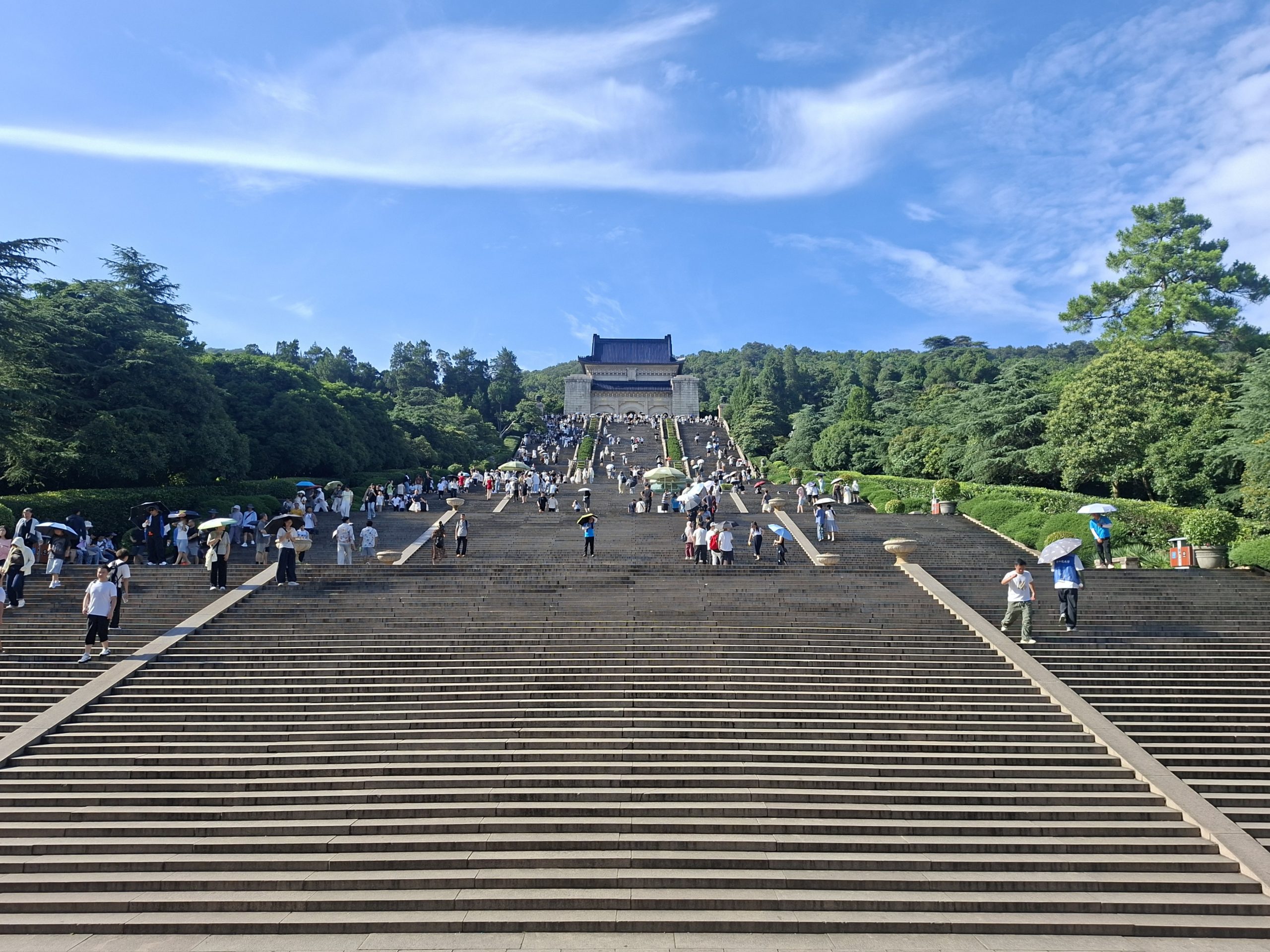
Day 142 – Nanjing (Rest Day)
Schweiss und Besucher in Strömen Heute Morgen versuchten wir nochmals Billete für die Gedenkhalle für die Opfer des Massakers von Nanking durch japanische Invasoren zu reservieren. Allerdings hatten wir wie schon gestern…
-
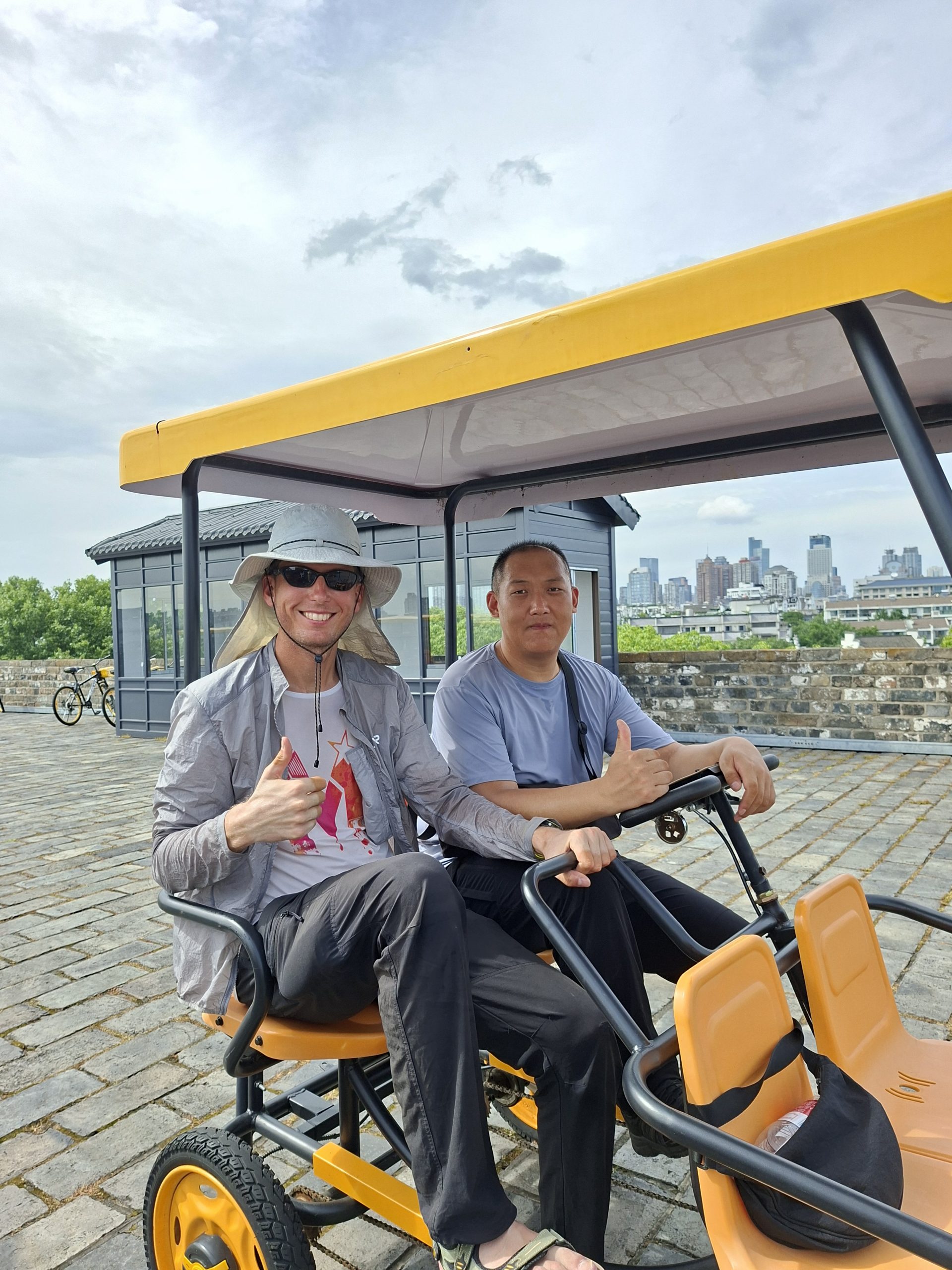
Day 141 – Nanjing (Rest Day)
Veganes Buffet und Stadtmauer Nach dem ausschlafen – so richtig klappte das nicht, es wurde zu früh hell und laut – und bestaunen der Aussicht vom 25. Stock unserer Unterkunft nahmen wir…
-
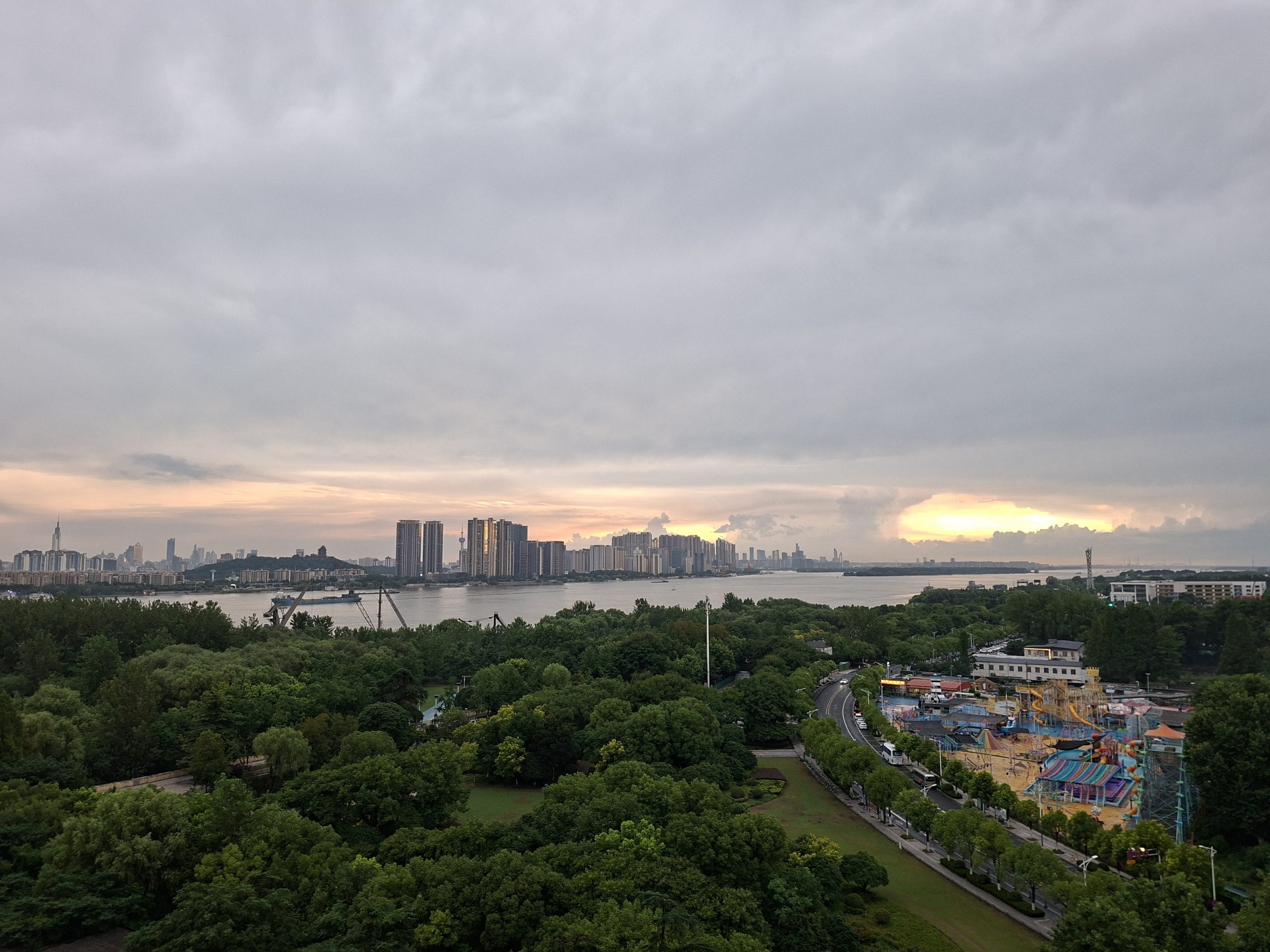
Day 140 – Dingyuan – Nanjing (143.40 km / 1045 m elevation gain)
Vom Schweissbad in den Regen Die ursprüngliche grobe Planung war erst Morgen in Nanjing anzukommen. Doch so wie die Hotels gelegen waren bietete es sich an, heute eine etwas weitere Strecke zu…

Leave a Reply