



A relaxed day for a change
For today, I had planned only a short stage. On the one hand, because I was very tired yesterday evening, and on the other hand, because the accommodation options worked out in such a way that I—or rather Jiabin—could find a hotel after about 66 km, but none for quite a long distance afterward. Somehow it seemed meant to be; it simply fit perfectly.
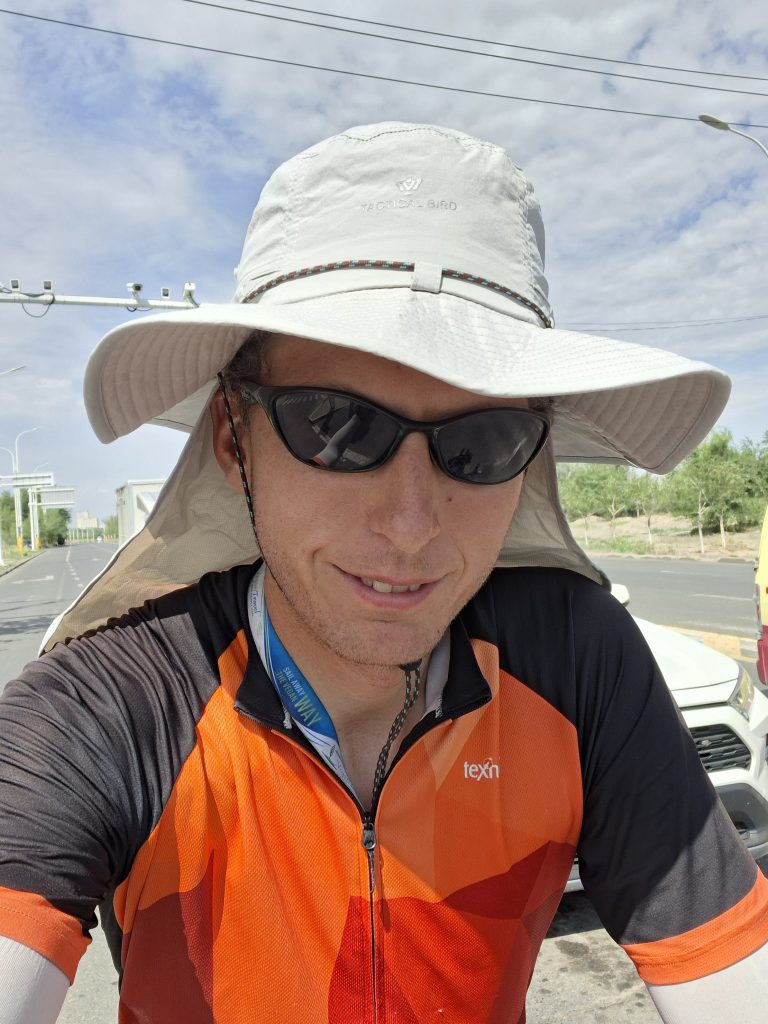
As a result, I slept quite late and eventually did not set off until 11 a.m. By then it was already 30°C, and today I wore a sun hat instead of my helmet. It genuinely felt cooler and more comfortable. I also bought some electrolyte drinks to better support my body.
So I entered the hotel address into my phone, or rather into Amap (Gaode Map, essentially the Chinese version of Google Maps), and set off at a very relaxed pace. My heart rate had returned to its usual low range, which was already reassuring.
Amap continually provides voice notifications—in Chinese, of course—and I find some of them quite interesting, for example:
“With your current speed, you can pass the next traffic light.”
“At 18 km/h you can pass the next traffic light; your current speed is 23 km/h.”
“Attention, a large truck is approaching from behind. Please be careful.”
“Attention, a fast-moving car is approaching from behind. Please be careful.”
It is obvious that the exact traffic-light phases are available within the app. While mobile phones in our countries are often used, for example, for traffic congestion detection, here they also seem to be used to analyze individual vehicles, such as identifying a particularly fast-moving car.
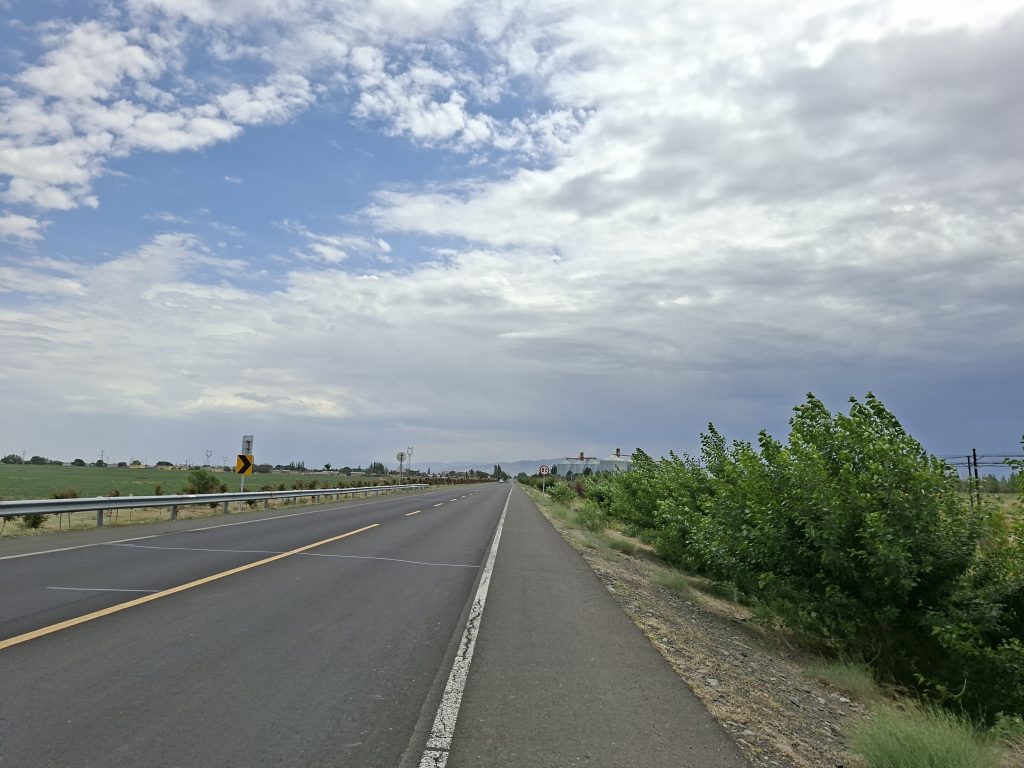
After a break at roughly the halfway point—I finished the noodles from last night because I had not been able to eat everything in the morning—the road became somewhat steeper than before, though still very moderate. The surroundings grew drier, but clouds moved in, and together with the increasing elevation, the temperature became very pleasant.
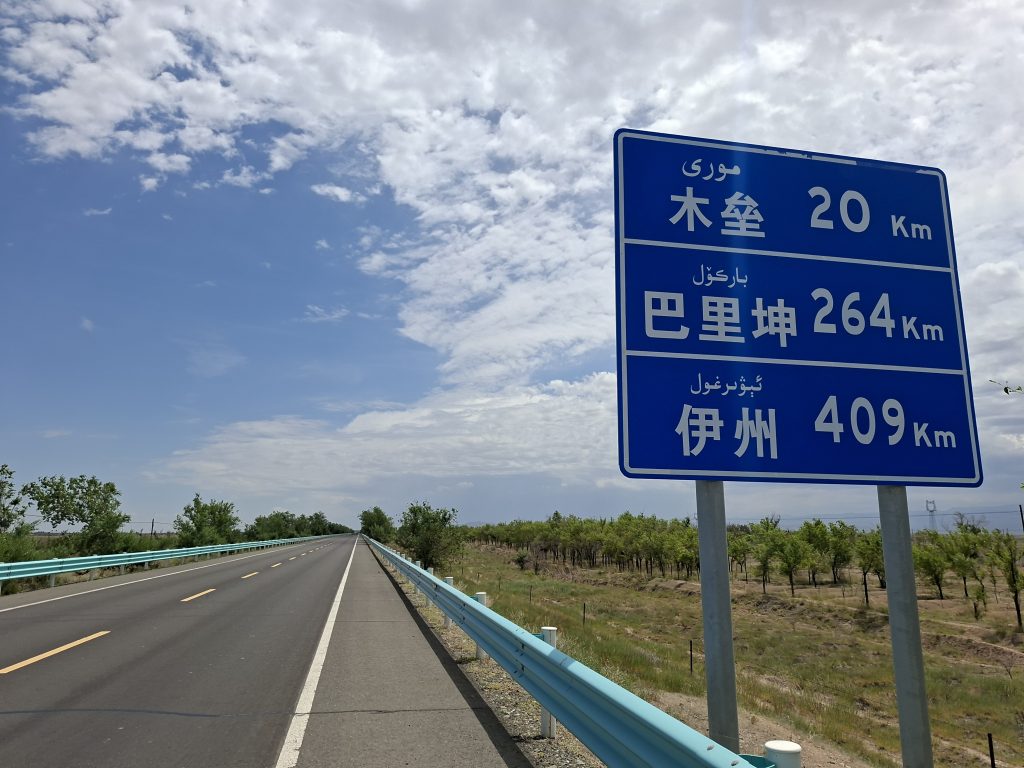
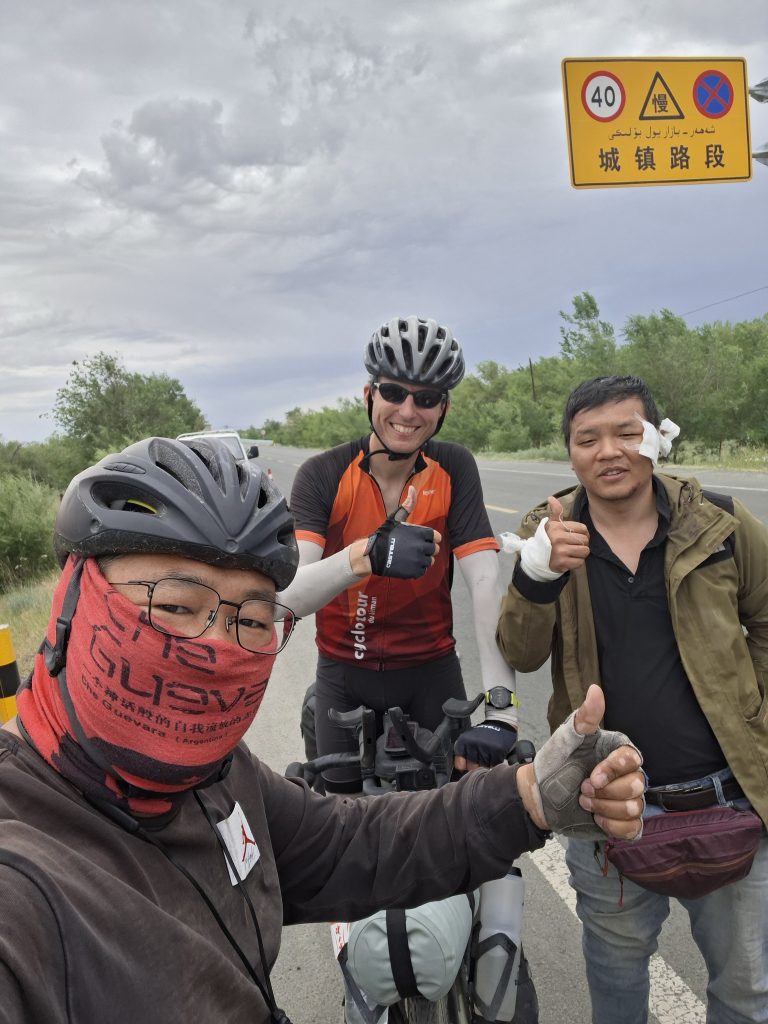
Shortly before Mori, I saw a cyclist coming toward me, or rather standing on the opposite side of the road, accompanied by a man on a scooter. I crossed over and stopped to chat with them. Jack, who was riding the scooter, had been in an accident yesterday and was covered in bandages. Magang had just collided with a car, which was the reason for their current stop. They recommended that I start wearing my helmet again, and given the pleasant temperature, I did so. They were also able to tell me where I could find accommodation tomorrow, since neither Jiabin nor I had been able to find anything online in the village I was planning to reach. According to them, there was a simple guesthouse there, and they even sent me the address—excellent.
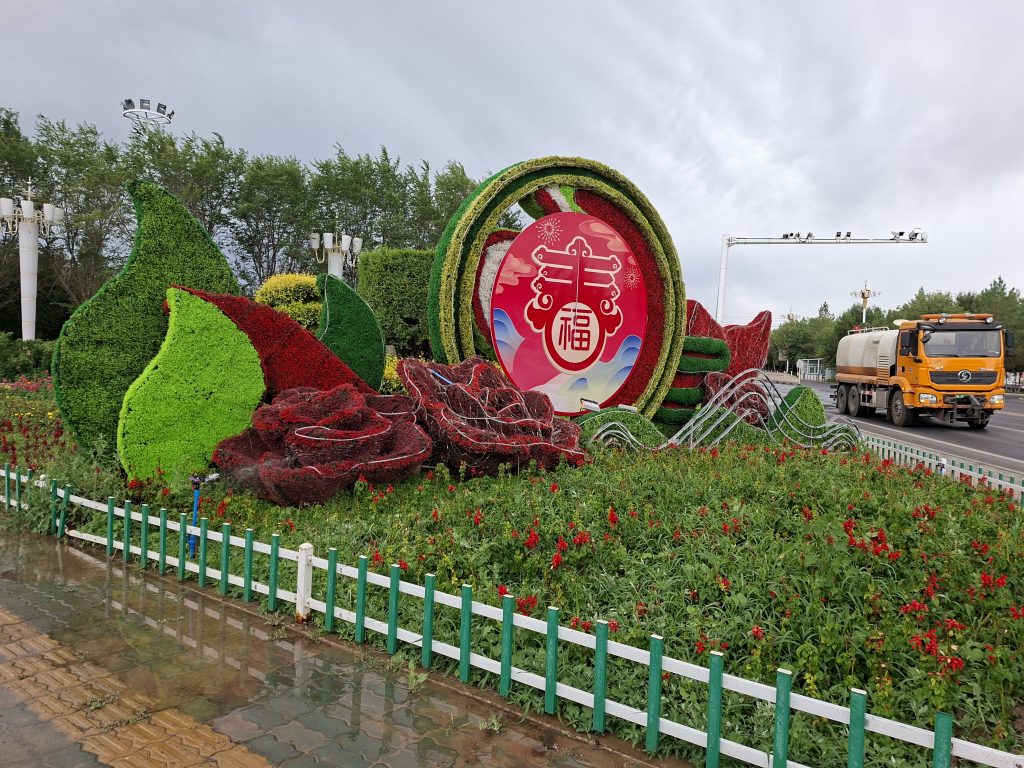
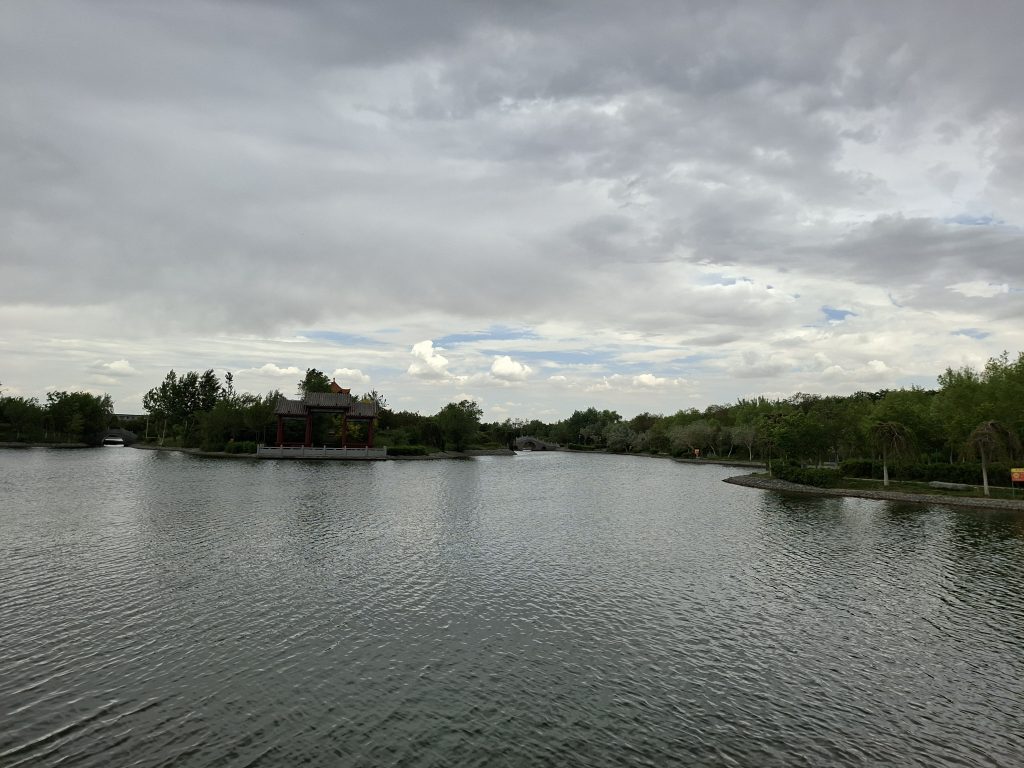
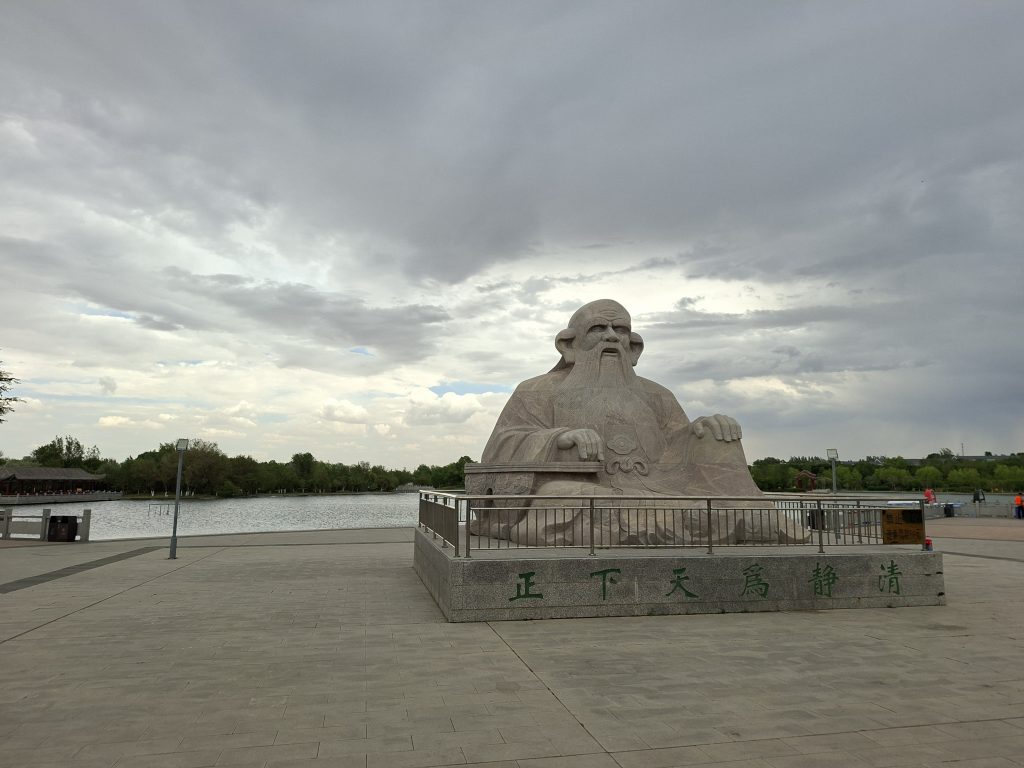
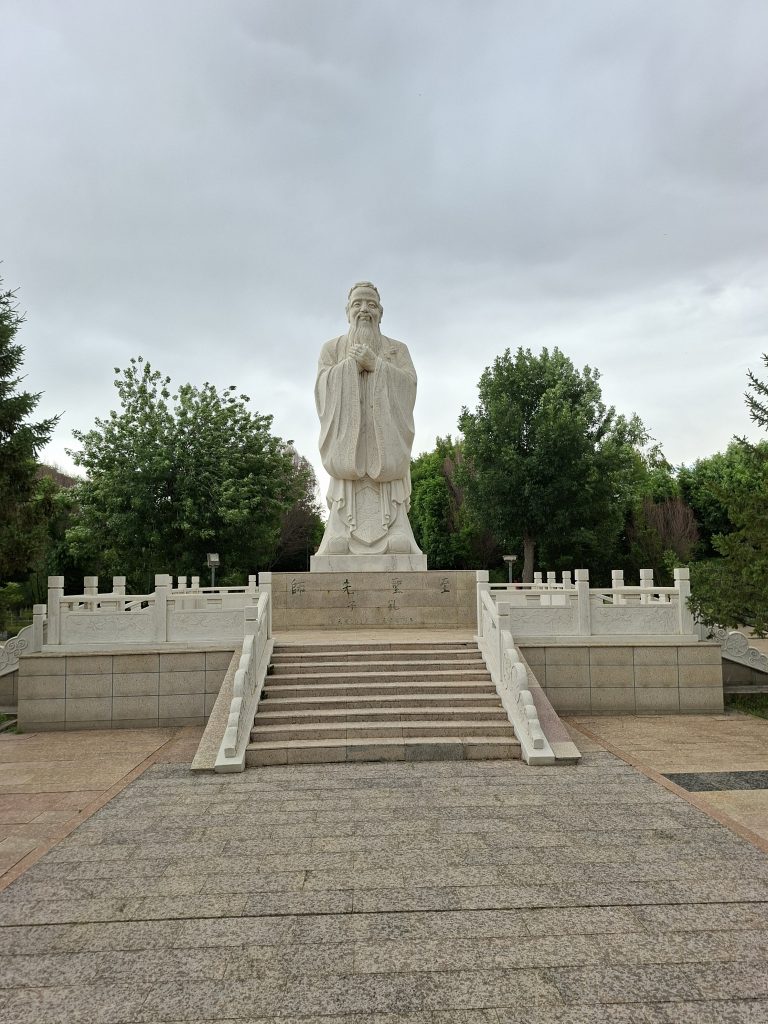
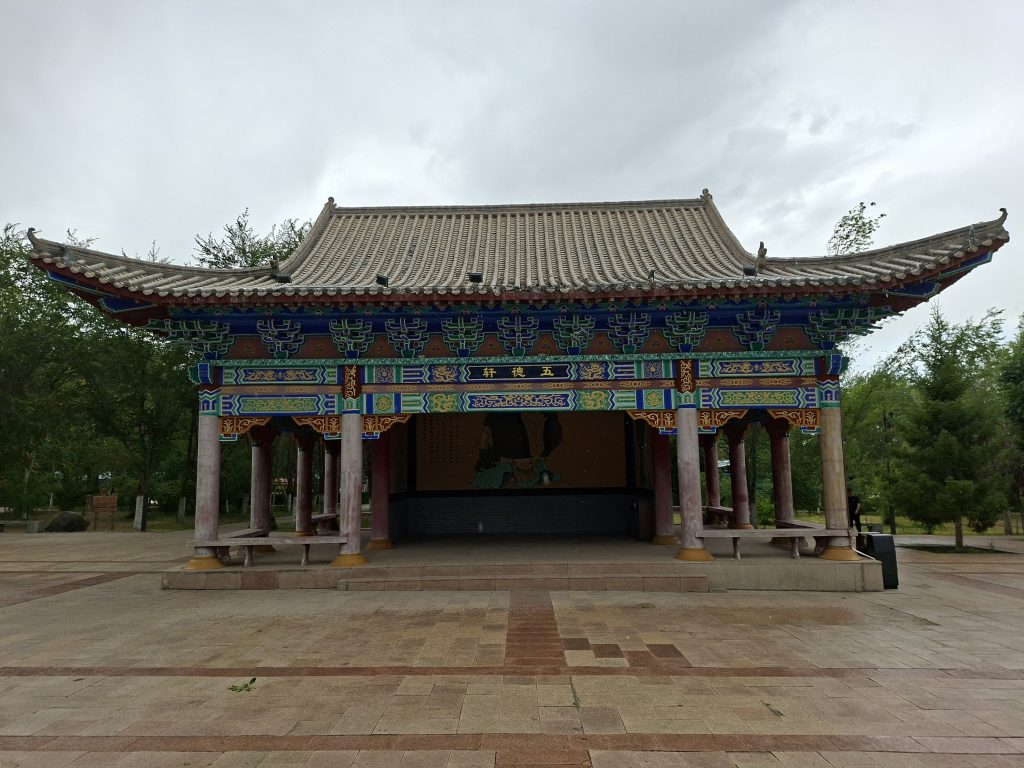
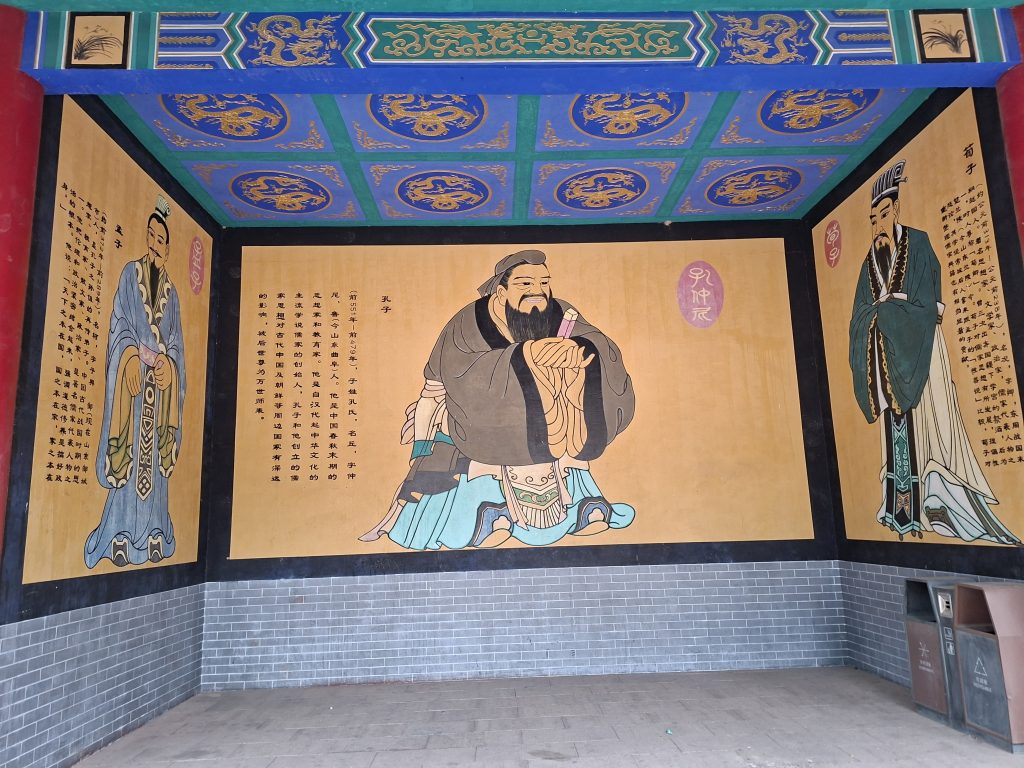
Before heading to the hotel, I visited a small park. I had not seen many typical Chinese-style buildings like those in this part of China so far, although perhaps I had simply overlooked them. In any case, the small detour was definitely worthwhile.
During the final two kilometers, it actually started to rain lightly. Given that the temperature was still 29°C, however, it was not a problem at all. I arrived at my accommodation, located at just under 1,300 meters above sea level, at 3:45 p.m., and unlike yesterday and the day before, I was still in excellent shape. I was nevertheless tired, so I used the time before dinner to rest.
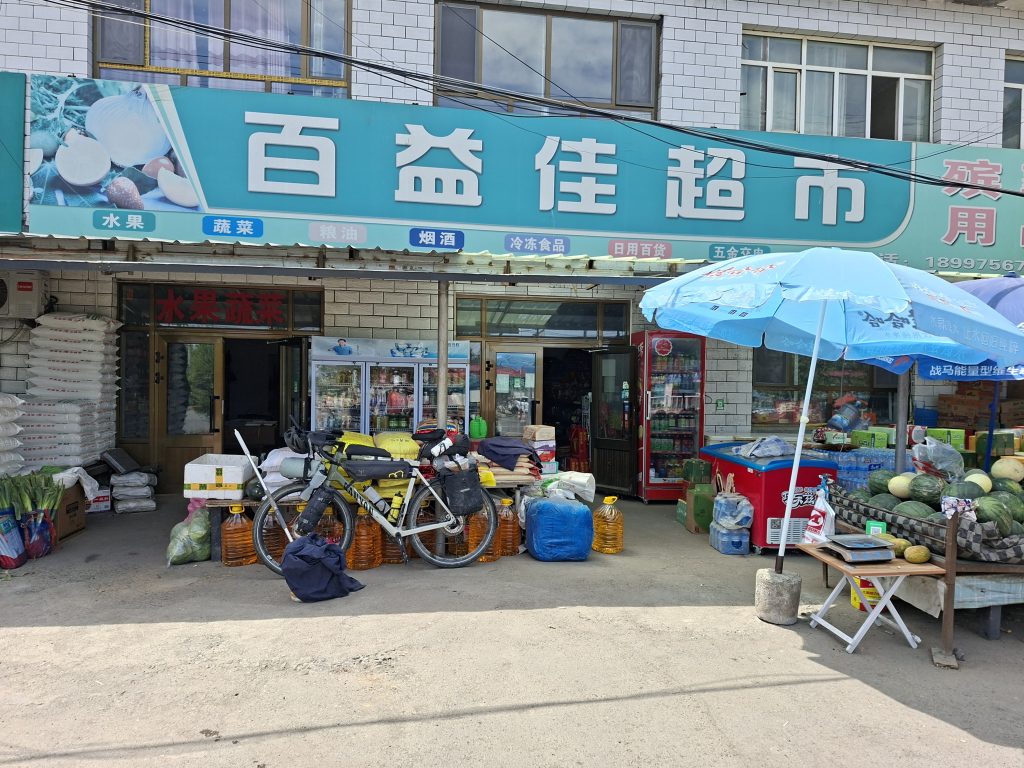
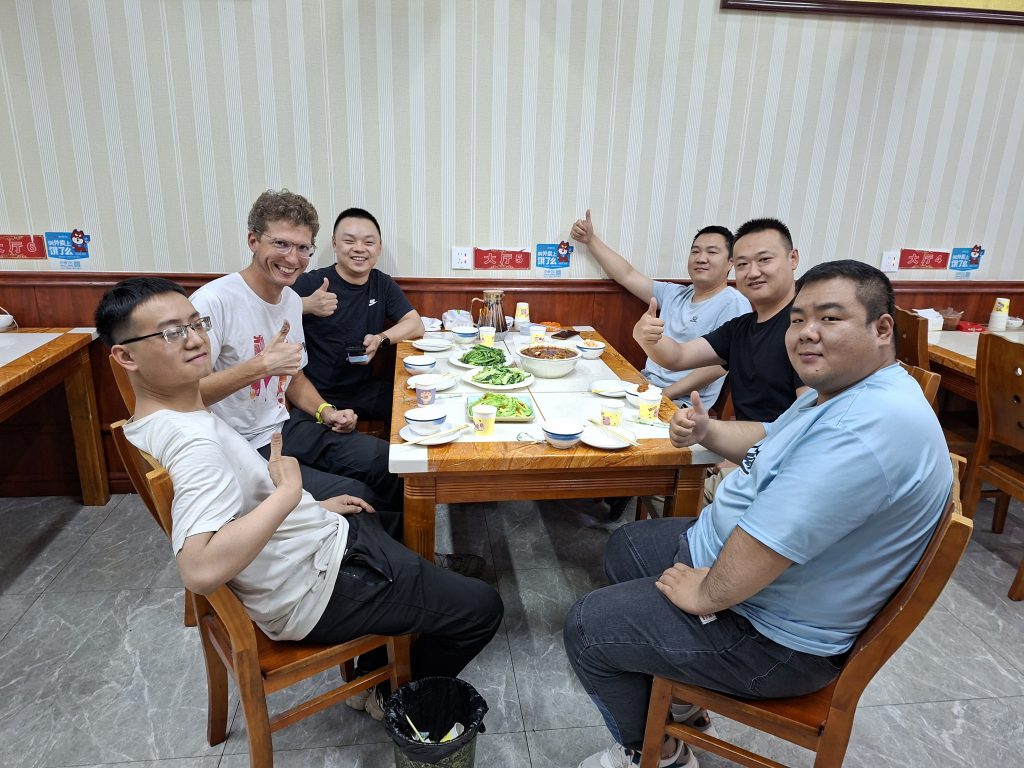
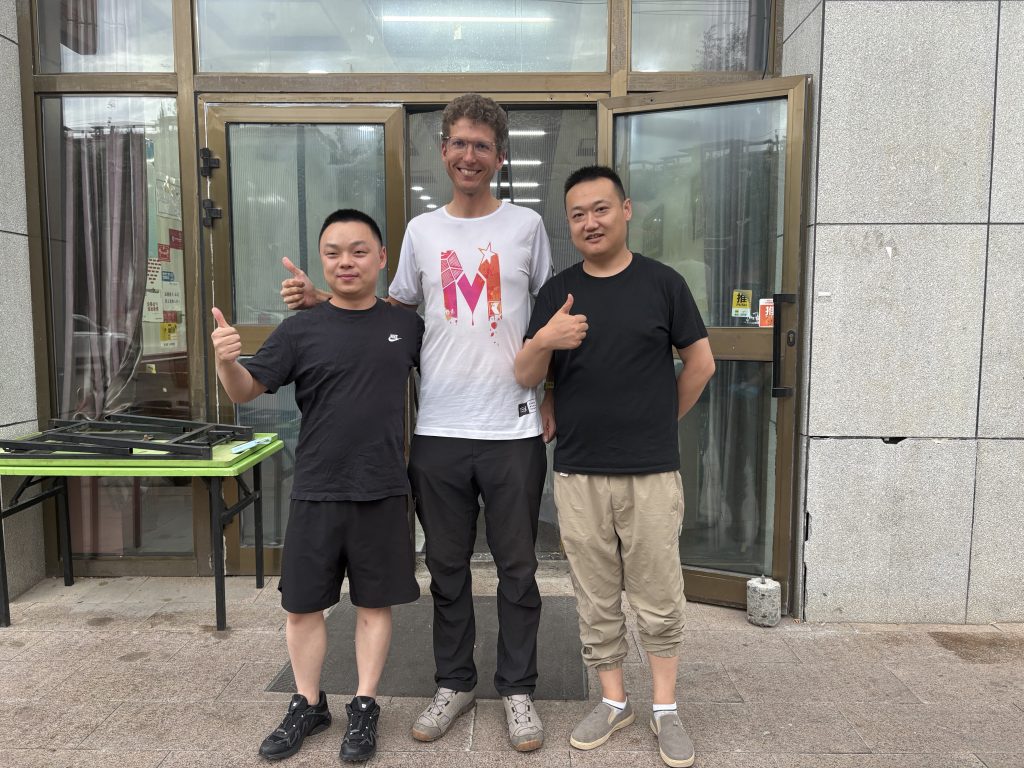
At dinner—I had to walk nearly a kilometer before finding a restaurant that did not appear to serve only meat dishes—I met five friendly Chinese men. After I had placed my order, they invited me to sit at their table, so my vegetable dish was delivered there as well, and I did not have to eat alone. They also encouraged me to try their dishes—they said that in China everyone is one big family. I had quite an extensive conversation with them. They work with wind turbines at a wind farm about 100 km away. Jincheng, with whom I spoke the most, recommended a place for breakfast tomorrow and even called there twice to clarify all of my questions. Many thanks for that! I noticed that they were gradually preparing to leave, but Jincheng told the others to wait because I was still eating. Once I had finished as well, he gave the signal that it was okay to go. When I wanted to pay, Jincheng told me that everything had already been paid for—many thanks for that too.
Back in my hotel room, I repaired the inner tube that had been damaged the day before yesterday. Shortly before 10 p.m., a police officer stopped by. I asked whether he wanted to see my passport, and he said no. He only wanted to know where I was heading and whether everything was okay with me. I replied that all was well, and he told me that if I encountered any problems, I could contact him through the receptionist. The police—your friend and helper indeed.
-
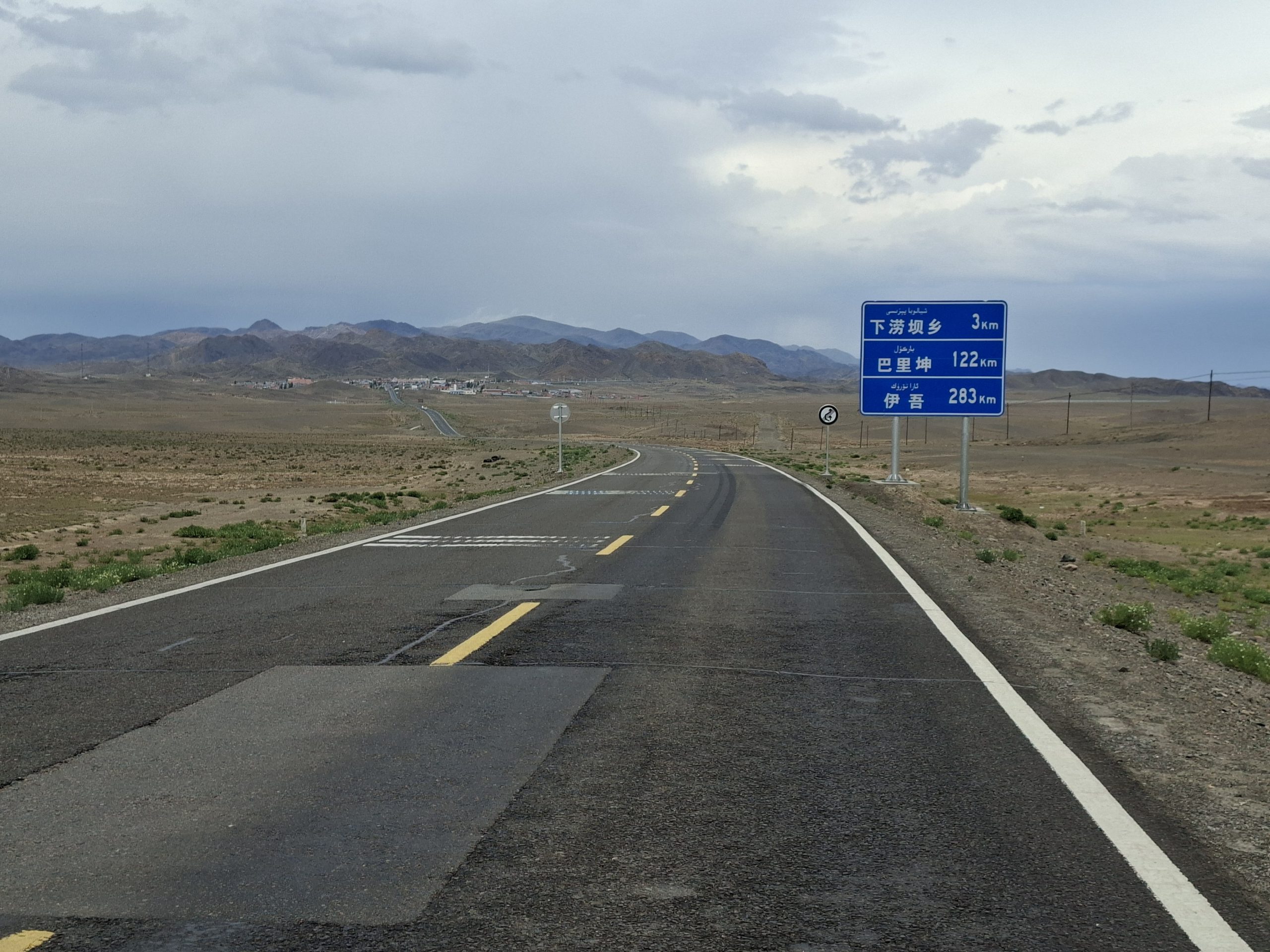
Day 102 – Mori – Xialaoba (122.62 km / 1055 m elevation gain)
Unglaublich viele Windräder und wieder mal Regen in der Wüste Kurz nach halb elf gings heute los. Ich wollte eigentlich etwas früher aufbrechen, war aber noch recht müde und hatte wortwörtlich Mühe…
-
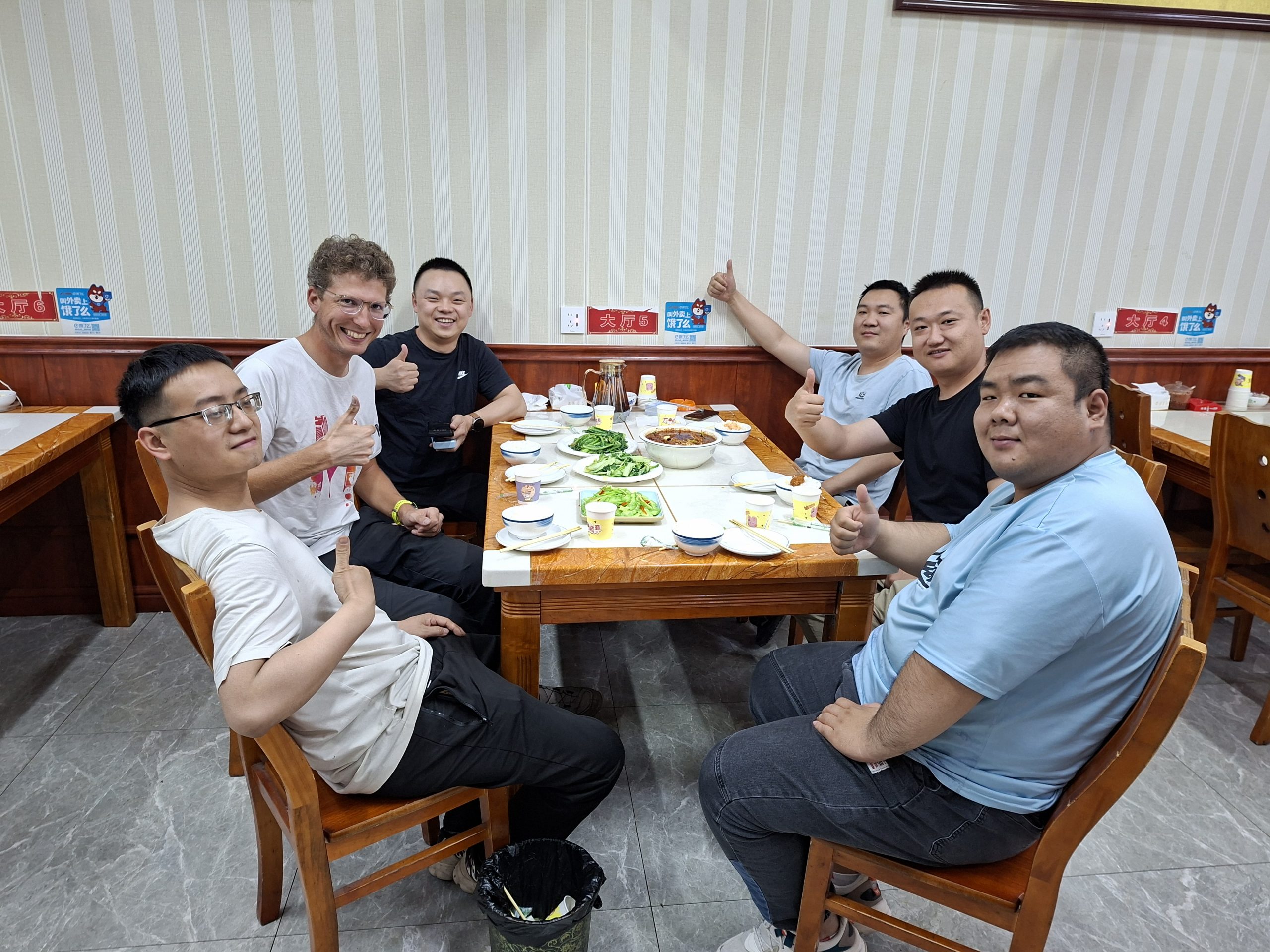
Day 101 – Qitai – Mori (67.57 km / 536 m elevation gain)
Zur Abwechslung ein lockerer Tag Für heute habe ich nur eine kurze Etappe eingeplant. Einerseits, weil ich gestern Abend sehr müde war und andererseits hat es sich mit den Übernachtungsmöglichkeiten auch so…
-
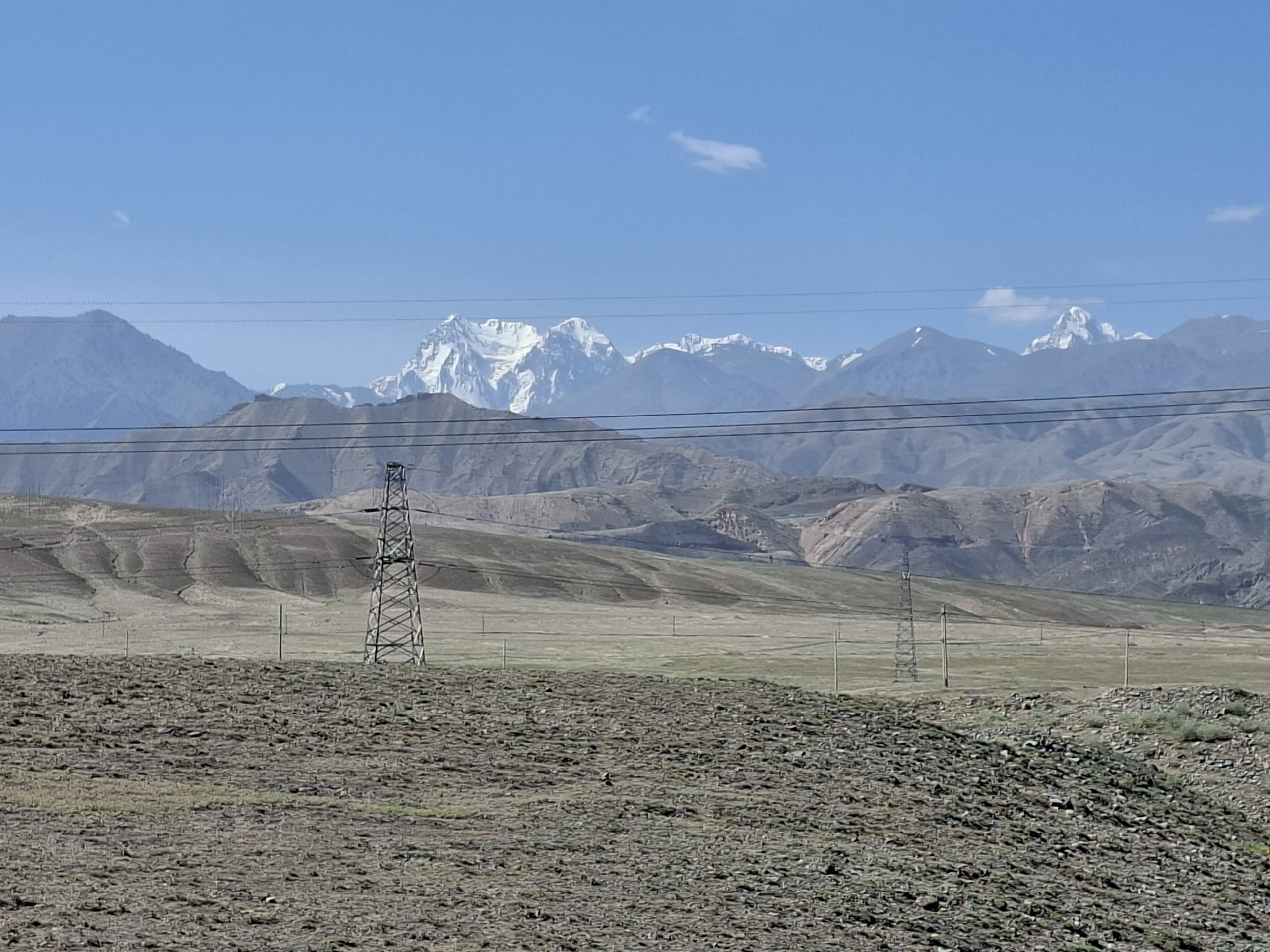
Day 100 – Ganhezi to Qitai (119.7 km / 800 m elevation gain)
Wieder ein richtig heisser Tag… Das Wetter ist heiss. So wollte ich heute früh los, doch es war wieder nach halb zehn bis ich aufbrach. Als erstes standen gleich etwas mehr als…

Leave a Reply